Best Highest RTP Slots UK: How RTP Works
 Available in GB
Explore how random outcomes, paylines and theoretical return figures shape the way UK online slots work.
Table of Contents
- How UK Online Slots Work: RNGs, Reels, Paylines and RTP
- What RTP Means in Practice for UK Slot Players
- Highest RTP Slots Available in the UK
- The Highest RTP Online Slot Games in the UK
- Online Slots with the Highest Published RTP Figures
- Finding the Highest-RTP Slot at a UK Online Casino
- Highest-RTP Slot Machines and Their Main Formats
- High RTP and Low Volatility: Why the Combination Matters
- Which Pragmatic Play Slots Have the Highest RTP?
- The Slot with the Highest RTP: What the Question Really Means
How UK Online Slots Work: RNGs, Reels, Paylines and RTP
UK online slots use random number generator (RNG) technology to produce unpredictable results. The relevant model is output randomness: the result cannot change in response to a particular scenario, such as previous wins, losses or the timing of a wager. Each spin is therefore generated independently by the game’s random process.
The visual layout normally consists of reels containing symbols. A winning combination depends on the symbols displayed and the rules defined by the game. Paylines specify which symbol arrangements qualify for a prize. Some games allow the number of active paylines to be selected, while the stake can also be adjusted before a spin. These settings affect the amount wagered and the possible ways a result may be evaluated, but they do not make an individual outcome predictable.
RTP, or return to player, is a theoretical percentage describing the long-run relationship between total stakes and total payouts. A slot advertised at 97% RTP is theoretically associated with £97 returned for every £100 wagered across a very large number of plays. It is not a prediction for one spin or a short session. Consequently, identifying the highest RTP slot in the UK requires separating the published theoretical figure from the random result produced by each individual game.
This page helps UK players review notable operators when looking for high-RTP slots in 2026. Use the listed facts to assess licensing, bonuses, payout speed and minimum deposit before choosing where to play.
License: UKGC Operator Licence · Bonus: £50 bonus · Payout speed: Within 48 hours · Min. deposit: £10 Platinum Gaming Limited holds a UKGC Operator Licence and offers a £50 bonus. Its stated payout speed is within 48 hours, with a minimum deposit of £10.
License: UKGC Operator Licence · Bonus: £20 bonus · Payout speed: Within 48 hours · Min. deposit: £10 Silverbond Enterprises is a UKGC-licensed operator with a £20 bonus. Withdrawals are stated to be processed within 48 hours, and the minimum deposit is £10.
License: UKGC Operator Licence · Bonus: £100 bonus · Payout speed: Within 24 hours · Min. deposit: £10 ProgressPlay Limited combines a UKGC Operator Licence with a £100 bonus. Its stated payout speed is within 24 hours, and the minimum deposit is £10.
License: UKGC Operator Licence · Bonus: £100 bonus · Payout speed: Within 24 hours · Min. deposit: £10 Genesis Global Limited is licensed by the UKGC and offers a £100 bonus. It states a payout speed of within 24 hours and requires a minimum deposit of £10.
License: UKGC Operator Licence · Bonus: £200 welcome bonus · Payout speed: Within 48 hours · Min. deposit: £10 32Red holds a UKGC Operator Licence and advertises a £200 welcome bonus. Its stated payout speed is within 48 hours, with a minimum deposit of £10.
License: UKGC Operator Licence · Bonus: £100 bonus · Payout speed: Within 24 hours · Min. deposit: £10 LeoVegas is a UKGC-licensed operator offering a £100 bonus. It states that payouts are made within 24 hours, and the minimum deposit is £10.
What RTP Means in Practice for UK Slot Players
Return to player (RTP) is a theoretical percentage describing how much a slot is designed to return across a very large number of plays. It is not a promise attached to a particular session, deposit or individual spin. Because online slot outcomes are random, the published figure cannot identify what the next result will be.
A slot with 95% RTP is theoretically associated with £95 returned for every £100 wagered in total over a very long period and many plays. The remaining amount represents the theoretical house edge. This calculation applies to the aggregate of play, not to each player separately and not to a short sequence of spins.
The same principle applies to a 97% RTP slot: its theoretical return is £97 for every £100 spent on the slot when measured across the relevant long-run activity. It does not mean that a player staking £100 will receive £97 back, nor that the results will balance after a particular number of spins. Actual outcomes can differ substantially because each result is random.
This distinction matters when assessing which slot has the highest RTP in the UK, or which casino games offer the highest RTP. A higher published percentage describes a stronger theoretical return, but it does not establish the result of a single game session. It also cannot by itself determine which casino game will produce a personal profit.
Accordingly, RTP is best read as a long-run statistical measure. Comparisons between slots or other casino games should treat the percentage as an indication of theoretical payout design rather than a forecast. The question of what slot has the highest RTP therefore requires a stated game, version and published figure; no RTP percentage guarantees a particular outcome.
RTP Definition Theoretical long-run percentage of total stakes returned to players
Core Technology Random Number Generator (RNG)
Key Factor Outcome randomness ensures results are independent of previous plays
Highest RTP Slots Available in the UK
The highest-return slot category is defined by the published RTP figure attached to a game, not by a recent winning streak or the size of its advertised prizes. RTP means theoretical return to players across a very large number of plays. It does not determine the result of an individual spin, and random outcomes can produce results that differ substantially from the stated percentage over a short playing session.
A slot showing 97% RTP therefore has a theoretical return of £97 for every £100 wagered in total. That is a statistical illustration, not a promise that a particular player will receive £97 after spending £100. The same principle applies to the highest RTP slots available in the UK: their ranking describes the mathematical return specified for the game, while individual results remain random.
Named UK slot examples
The available named games form a mixed group rather than a verified ranking by RTP. Their inclusion does not establish that one has a higher theoretical return than another.
- Age of Gods — a named slot machine.
- Jackpot Giant — a named slot machine.
- Mega Moolah — a named slot machine.
- Pokerstars’ Vegas Infinite — a named slot machine.
No RTP figure is available in the supplied evidence for these games. It would therefore be inaccurate to assign percentages, arrange them from highest to lowest return, or describe one as the single best choice on mathematical grounds. A reliable comparison requires the RTP published for the relevant game version and the terms displayed by the operator offering it.
This qualification matters because a slot can be presented as popular, branded or associated with a major prize without that description proving a high theoretical return. The available evidence identifies branded slots as often having low RTP and fewer extra features than other slots. Branded games are frequently built around popular culture, including Hollywood films and famous video games. Theme recognition can therefore be commercially important while remaining separate from the RTP calculation.
How to read a high-RTP label
A high RTP figure is useful as a comparison measure, but it is not a forecast of a session’s result. A player may experience a return below the stated percentage, or a return above it, because the percentage describes aggregated theoretical performance rather than a fixed payment attached to each sequence of spins. Random outcomes prevent the published figure from functioning as a short-term guarantee.

The distinction is especially important when comparing casino slots with prominent themes or jackpot associations. A large potential prize does not, by itself, demonstrate a high RTP. Likewise, a familiar brand does not establish that a game has a favourable theoretical return. The relevant evidence is the RTP figure for the specific slot version, not its title, theme or marketing position.
The same game may also be presented in contexts where the available information is incomplete. If a listing names a slot but does not state its RTP, the defensible conclusion is limited: the game is identifiable, but its position among the highest-RTP slots cannot be confirmed from that listing. Adding an unsupported percentage would turn an incomplete comparison into a false one.
Comparing the available category
The phrase “highest RTP slots” can refer to several different comparisons:
- games with the highest published theoretical return;
- casino slots whose RTP is displayed clearly;
- online slots available through a particular UK-facing operator;
- branded or jackpot-themed games that are being compared with other slot formats.
These categories should not be treated as interchangeable. A list of named machines is not automatically a verified RTP table, and a game’s availability does not prove that it has the highest return. The supplied evidence supports discussion of the theoretical meaning of a 97% RTP and the random nature of slot results, but it does not provide a complete percentage ranking for Age of Gods, Jackpot Giant, Mega Moolah or Pokerstars’ Vegas Infinite.
Consequently, the most precise description of the best high-RTP slots in the UK is conditional: the strongest candidates are games whose published RTP is available and can be compared on the same basis. Where no figure is supplied, the game can be named but not ranked. Where a figure is supplied, it should be described as a theoretical long-run return rather than an expected outcome from an individual deposit or playing session.
This approach also prevents the common mistake of treating an attractive theme or a possible large prize as evidence of superior value. RTP is the relevant statistical measure; popularity, branding and prize visibility are separate characteristics. Among the named games, only the titles themselves are established by the available facts, so no unsupported “best” order can be given.
A named slot machine.
A named slot machine.
A named slot machine.
A named slot machine.
The Highest RTP Online Slot Games in the UK
Online slot games in Britain are compared primarily through their published RTP figures, but the figure belongs to the individual game configuration rather than to the casino brand as a whole. A casino may host many slots alongside blackjack, roulette, live dealer games, scratchcards and poker rooms, while each slot retains its own mathematical parameters. Consequently, a list of online slots with the highest RTP must identify the games themselves and distinguish their stated return from the conditions under which they are offered.
No verified RTP percentages or complete game catalogue are available for the named games in the supplied evidence. The following titles can therefore be identified as online slot products, but cannot be ranked honestly by return:
- Age of Gods — an identifiable slot machine; no verified RTP figure is available here.
- Jackpot Giant — an identifiable slot machine; no verified RTP figure is available here.
- Mega Moolah — an identifiable slot machine; no verified RTP figure is available here.
- Pokerstars’ Vegas Infinite — an identifiable slot machine; no verified RTP figure is available here.
This limitation matters because the phrase “highest RTP” can suggest a definitive ranking when the underlying figures have not been established. Naming a game without its RTP does not demonstrate that it belongs at the top of the market. It only confirms that the title is part of the permitted comparison set.
How RTP is presented in online casinos
RTP figures are generally presented as game information, while the casino supplies the interface, payment arrangements and wider catalogue. A specialist review source notes that operators can differ in their game libraries, deposit options and refund options. Those differences affect the platform experience, but they do not convert one slot’s stated RTP into another slot’s figure. The relevant comparison remains the information attached to the selected game.
Online slots use random number generators to produce unpredictable outcomes. Their results are therefore not adjusted to compensate for a player’s previous wins or losses. RTP is a statistical measure attached to the game, not a promise concerning a particular session. A displayed percentage cannot establish which title will produce the most favourable short-term result.
The regulatory setting provides a separate point of comparison. Online casinos operating in Britain must hold a licence from the UK Gambling Commission. UK regulators also require independent auditing of random number generators. These requirements concern the operation and testing of the gambling product; they do not make every licensed slot identical, nor do they guarantee a particular return to an individual player.
- Check the specific RTP for the game version being offered
- Verify the casino holds a valid UK Gambling Commission licence
- Treat RTP as a long-run statistical measure
- Use RTP to forecast the outcome of a single spin or session
- Assume a branded or popular game automatically has a high RTP
- Treat a large potential prize as proof of high theoretical return
Comparing high RTP with availability
A high published RTP is useful only when the relevant version of the slot is actually available in the British online casino being assessed. Game availability can differ between operators, and a title may appear in one catalogue but not another. The casino’s licence status and the game’s stated information consequently answer different questions: the first concerns whether the operator may provide online gambling services in Great Britain, while the second concerns the slot’s theoretical return.
The distinction also prevents a common category error. “Best online casino slots with the highest RTP” may refer to the games with the largest stated percentages, to the titles available at a particular operator, or to games that combine high RTP with a preferred payout pattern. These are not interchangeable criteria. Without verified volatility data, no reliable ranking of the lowest-volatility, highest-RTP online slots can be made from the available facts.
A defensible comparison should therefore record the exact game title, the RTP shown for the relevant version, the operator offering it and the applicable game information. Where any of those details is missing, the result is an incomplete list rather than a confirmed top-ten ranking. The supplied evidence does not establish ten distinct online slot titles with comparable RTP figures, so a “top 10” list would require unsupported additions or invented percentages. Neither would accurately answer which online slot game has the highest RTP in the UK.

Online Slots with the Highest Published RTP Figures
Published RTP is the main numerical feature used when comparing online slots, but it must be read as a theoretical statistic rather than a promised result. A slot advertised with an RTP of 97% is calculated to return £97 for every £100 wagered over a sufficiently large number of plays. That calculation describes the game’s designed payout rate; it does not determine what happens during one session or to one individual player.
How to Compare Published RTP
A comparison of online slot games with the highest RTP should begin with the exact figure stated for the game version available in the relevant casino. The percentage is not meaningful in isolation if the game has several configurations or if the displayed information is incomplete. The published value should therefore be checked alongside the game’s rules, paytable and available stake settings.
The basic comparison is straightforward:
- identify the stated RTP;
- confirm that the figure applies to the version being offered;
- compare the percentage with other available games;
- treat the result as a long-run theoretical measure, not a forecast.
A higher published RTP indicates a higher theoretical return under the stated mathematical model. It does not mean that every session will outperform a slot with a lower figure. Online slot outcomes are random, and the RTP calculation becomes informative only across a very large volume of play.
The presence of familiar game features does not, by itself, establish a high RTP. Online slots generally use three to five reels, with symbols that can form winning combinations or activate bonus rounds. Players may also choose a stake and the number of active paylines. These settings describe how the game is played, whereas RTP describes the theoretical relationship between total wagers and total returns.
Why the Highest Figure Is Not Always the Best Comparison
A published percentage provides only one part of the comparison. Two slots can state different RTP figures while presenting different reel layouts, payline arrangements and bonus mechanics. A game with a higher stated RTP may still produce results that feel less consistent during a short period because the percentage does not specify the outcome of the next spin.
How to Compare RTP
- Identify the stated RTP for the specific game version
- Confirm the figure applies to the version currently offered
- Check the game’s rules and paytable
- Verify the operator’s UKGC licence status
The same distinction applies to Megaways slots. A specialist gaming review reports that some modern Megaways games can offer more than 100,000 possible paylines. That feature increases the structural complexity of the game, but the number of possible paylines does not establish the RTP. The relevant figure remains the published RTP for the specific slot version.
Accordingly, claims about the highest RTP Megaways slots require two separate checks: whether the game is a Megaways title, and what RTP is actually stated for that title. The format alone cannot support a ranking.
Reading RTP Without Treating It as a Guarantee
The clearest interpretation is mathematical rather than predictive. If a slot’s published RTP is 97%, the theoretical model assigns a return of £97 per £100 wagered in aggregate. It does not allocate that return evenly, and it does not require a player’s balance to move towards that amount during a particular set of spins.
Random number generation is central to online slots, so previous outcomes do not create a contractual expectation about the next result. A sequence of wins does not convert the following spin into a predicted loss, and a sequence of losses does not guarantee an approaching win. RTP remains a long-run reference point.

This is why the phrase “highest RTP slot game in the UK” has to be qualified. The answer can refer to the highest published percentage among the games being compared, but it cannot identify a slot that guarantees the greatest return to an individual player. A list of games with high stated RTP is therefore more accurate when presented as a comparison of published theoretical figures.
For the same reason, “best” should not be used as a synonym for “highest RTP”. RTP can rank the stated theoretical return, but it cannot establish which game will produce the most favourable short-term result. A careful comparison records the published percentage and keeps the distinction between statistical design and actual play explicit.
Finding the Highest-RTP Slot at a UK Online Casino
A high published RTP does not exist independently of the casino supplying the game. The relevant comparison therefore has two parts: the slot’s stated theoretical return and the conditions under which the casino offers it. An online casino with the highest RTP is not necessarily identifiable as a single operator, because casinos may host different games, configurations and providers.
Licensing comes first
Online casinos operating in Britain must hold a licence from the UK Gambling Commission (UKGC). The requirement applies to operators providing online gambling services to consumers in Great Britain, regardless of where the business is based. A remote operating licence is required for online gambling activities in this market.
Licensing Verification
Always check the UK Gambling Commission public register to verify an operator’s licence number and domain.
The UKGC maintains a public register of current operating and personal licences. The operator name or licence number can be checked against that register, together with the domain listed for the business. This is a more precise verification method than relying on a logo, a claim of regulation or a licence badge displayed on a casino page.
Licensed operators must also follow consumer-protection requirements. These include offering deposit limits, breaks and self-exclusion, and allowing players to stop playing while retaining the remaining deposit and winnings earned from that deposit. Remote operators must belong to GAMSTOP, the national online self-exclusion scheme. Operators must prompt players to set a deposit limit before the first deposit and must not accept gambling payments by credit card, including credit-funded e-wallet payments.
Compare the casino’s game library
Once licensing has been established, the next question is whether the casino actually supplies the relevant high-RTP games. A casino may promote a large slot selection while lacking a particular title or offering only a different RTP configuration. The game information shown in the casino lobby is therefore important: the stated RTP should be read alongside the game’s rules or information panel rather than inferred from its title, theme or provider.
The available evidence does not establish one universal “highest-RTP online casino game” or one permanent highest-RTP online slot list for the UK. A meaningful comparison requires a named game, its published RTP and confirmation that the title is available at the operator being assessed. Without those three elements, a ranking can confuse the casino’s catalogue with the slot’s own statistical specification.
The same principle applies when comparing several operators. A casino with a broader game library may make more high-RTP titles available, while another may carry fewer games but still offer the particular slot under consideration. The number of games alone does not establish better theoretical value.
Examine practical account conditions
Casino choice also involves the services attached to the account. A source-specific profile describes UnionJackpots Casino as offering a demo mode without wagering funds and real-money play in which cash or other accepted currencies can be staked. Those are features reported for that operator, not general properties of every UK casino.
More broadly, operator comparisons can include game libraries, deposit options and refund options. These categories matter because the same RTP figure does not make two casino accounts identical. Payment processing practices must be disclosed by operators, while responsible-gambling tools and complaint-handling procedures form part of the regulated operating framework.
Independent auditing of random number generators is required by UK regulators. This supports confidence that the game’s outcomes are produced under the required technical controls, but it does not turn a high RTP into a guaranteed result for an individual session. RTP remains a theoretical property of the slot, while the casino determines where and under which account conditions that slot can be played.
Consequently, identifying the best online casino for a high-RTP slot is a verification exercise rather than a search for one universal winner: confirm the UKGC status, locate the published RTP for the available game, and then compare the operator’s library and account conditions.
Game Availability
High RTP figures are only relevant if the specific game version is actually available in the casino’s current catalogue.
Highest-RTP Slot Machines and Their Main Formats
RTP is not determined by the physical appearance of a machine or by its jackpot label alone. A slot machine’s published RTP, if available, remains the relevant theoretical measure; the format describes how the game accepts stakes, presents winning lines and structures prizes. The following categories therefore help compare machines without treating any one format as automatically the highest-RTP option.
Single-coin slot machines
Single-coin slot machines allow one coin to be played at a time, normally for a small amount. Their defining feature is the stake structure rather than a particular payout level. A simple interface can make the machine easier to classify, but it does not establish that the slot has a higher RTP than a multi-line or jackpot machine.
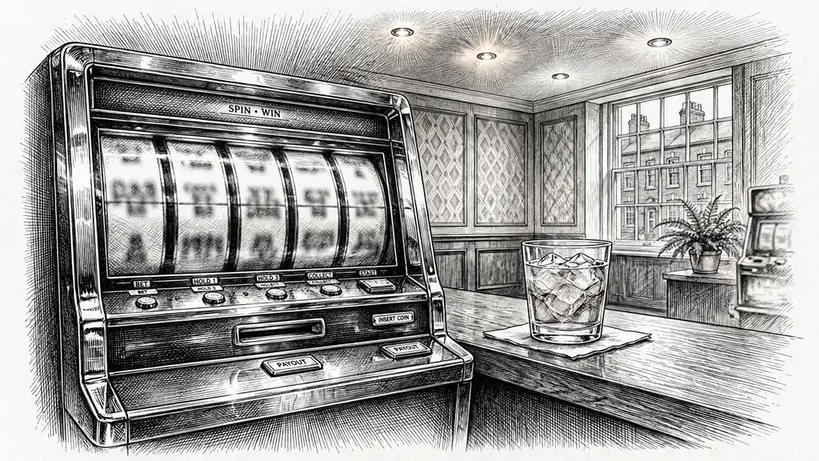
The term fruit machine is established in the UK for classic gambling machines, particularly those associated with pubs and clubs. Some traditional fruit machines use a compact reel layout and a limited selection of winning combinations. Any comparison based on RTP still requires the figure for the specific machine, because the category itself provides no reliable ranking.
Multi-line and Megaways slots
Multi-line slots allow several paylines to be active, with the selected stake and number of active lines affecting the amount committed to each spin. The presence of more lines can create more possible winning combinations, but it does not by itself indicate a higher theoretical return.
A source cited in a specialist review states that some Megaways slots offer more than 100,000 different paylines. That figure describes the possible line structure of the cited games, not a general RTP advantage. Megaways is a branded term for a particular changing-reel system, so its presence should be considered separately from the published RTP and from the machine’s volatility.
Flat-top jackpot machines
Flat-top jackpot machines offer a fixed top prize. The maximum award is therefore defined by the machine’s prize table rather than by a progressively increasing pool linked to wider play. This makes the prize structure easier to distinguish from that of a progressive jackpot machine.
A fixed top prize also says nothing by itself about RTP. A machine can advertise a substantial maximum award while returning a different theoretical proportion of stakes from another machine with a smaller top prize. Comparing slot machines with the highest RTP therefore requires the stated RTP for the individual title, not the size of its headline prize.
Progressive Jackpot
A prize structure where the jackpot increases as players participate, with the chance of winning being extremely low.
Progressive jackpot slots
Progressive jackpot slots use a prize structure in which the jackpot increases as players around the world spin the reels, according to a cited specialist source. That source also reports that progressive prizes can reach thousands of pounds and describes the chance of winning the jackpot as extremely low. These statements concern the jackpot mechanism and probability, not a guaranteed player return.
The same source reports that progressive jackpots may be triggered at random once a specified amount has been reached, including an account of a jackpot being triggered once per month. This is a report from that source, not a general rule for every progressive jackpot slot. The timing and trigger conditions therefore belong to the individual game’s rules.
How to compare machine formats
A useful comparison separates four questions:
- Stake structure: is the machine single-coin or multi-line?
- Winning-line design: does it use conventional paylines or a Megaways structure?
- Prize structure: is the top prize fixed or progressive?
- Published return: what RTP is stated for that specific machine?
This approach avoids treating the best slot machine with the highest RTP as synonymous with the machine offering the largest jackpot or the greatest number of paylines. Format explains how prizes are arranged; RTP supplies the statistical comparison. The highest-RTP slot machines list must therefore be built from named machines with verified individual RTP figures, rather than from machine format alone.
High RTP and Low Volatility: Why the Combination Matters
RTP and volatility describe different aspects of a slot’s payout profile. RTP is a theoretical return calculated over a very large number of plays; volatility concerns how that return is distributed. A high RTP therefore does not establish that winnings will arrive regularly, while low volatility does not imply a higher theoretical return.
A low-volatility slot is associated with a payout pattern in which smaller wins occur more frequently than large, infrequent prizes. By contrast, a high-volatility game can produce longer periods without a meaningful return, with payouts concentrated in less frequent events. These descriptions concern distribution, not certainty: online slot outcomes remain random, and no volatility classification predicts the result of an individual spin.
The distinction matters when comparing slots described as having both high RTP and low volatility. Such a combination may appear more suitable for players who value a steadier sequence of smaller payouts, but it does not convert the RTP percentage into a promise. A slot can theoretically return a stated proportion over a very large sample while producing materially different short-term results.
A survey reported by popularscience.co.uk found that more than 60% of surveyed slot-machine players preferred frequent smaller payouts to larger infrequent payouts. That finding describes the preference recorded in the cited survey; it is not evidence that low-volatility slots provide better financial outcomes. The same source reported that 33% of gamblers preferred progressive jackpot slots, illustrating the contrast between preference for regular smaller returns and interest in rare, potentially substantial prizes.
Progressive jackpot slots belong to the latter category in terms of prize structure. Their defining attraction is the possibility of a large jackpot rather than a frequent small payout, while the chance of obtaining that jackpot remains random. Consequently, a list of the highest-RTP, lowest-volatility slots cannot be constructed from RTP alone. It requires a published RTP figure and reliable information about the game’s volatility or payout distribution.
Where volatility data are unavailable, a slot should not be labelled low volatility merely because its RTP is high. The most precise comparison is therefore conditional: RTP indicates the theoretical long-run return, whereas volatility indicates the pattern through which wins may be distributed. Neither measure guarantees a particular session result.
Which Pragmatic Play Slots Have the Highest RTP?
Pragmatic Play is a software provider, not an RTP category. Its branding does not establish that a particular title has the highest return, and the available facts do not identify any Pragmatic Play game by name or publish a verified RTP table for the provider. Consequently, no specific Pragmatic Play slot can be ranked as the highest-RTP option on the evidence available here.
Does a high RTP guarantee a win?
No, RTP is a theoretical long-run measure and does not predict the outcome of individual spins or short sessions.
Can I trust branded slots to have high returns?
Not necessarily, as branded games are often built around popular culture and may have lower RTPs than other titles.
What is the difference between RTP and volatility?
RTP describes the theoretical payout percentage, while volatility describes how those payouts are distributed (frequent small wins vs. rare large wins).
How to Assess a Pragmatic Play RTP Claim
RTP is a theoretical percentage describing the return across a very large number of plays. A slot listed at 97% would theoretically return £97 for every £100 wagered in total. That figure is not a promise attached to an individual session: online slot outcomes are random, so the stated example cannot be treated as a guaranteed result.
A meaningful comparison therefore requires the RTP figure for the precise title and, where applicable, the precise configuration being offered. Provider name alone is insufficient. A catalogue may contain games with different mathematical models, and a general statement about Pragmatic Play cannot establish the return of every game carrying its logo.
This distinction is particularly relevant to branded slots. Available evidence indicates that branded slots often have lower RTP and fewer additional features than other slots. The presence of a recognisable theme therefore does not demonstrate stronger value. A title associated with popular entertainment may attract attention through its branding, but that characteristic says nothing by itself about its theoretical return.
What Can Be Confirmed
No named Pragmatic Play slot appears in the supplied evidence with a verified RTP figure. The named slot machines available for identification are Age of Gods, Jackpot Giant, Mega Moolah and Pokerstars’ Vegas Infinite; none is identified there as a Pragmatic Play title or assigned a Pragmatic Play RTP.
The defensible conclusion is therefore limited: the highest-RTP Pragmatic Play slot cannot be identified from the verified information available. Any ranking would require title-specific published data, while the random nature of online outcomes would still mean that the percentage represented a theoretical long-run return rather than a guaranteed result.

The Slot with the Highest RTP: What the Question Really Means
The phrase “the slot with the highest RTP” suggests that one game can be identified as the definitive answer. In practice, that conclusion requires qualification. RTP is a theoretical figure, while each online slot outcome is random. A published percentage therefore describes long-run statistical expectations, not the result of a particular session or spin.
A further difficulty is that availability matters. The game with the highest stated RTP is relevant only if it is offered by a casino serving players in Great Britain and under the applicable version of that game. A casino’s catalogue can therefore affect which high-RTP slot is accessible, but it does not turn the operator into a source of guaranteed returns. Online casinos also differ in the games they provide, so there is no single casino that can be identified universally as having the highest RTP.
Progressive jackpot slots illustrate why RTP alone cannot settle the comparison. Their jackpots have an extremely low probability of being won. A report published by popularscience.co.uk also describes progressive jackpots as being triggered at random, including an account of a jackpot being triggered once a month after reaching a specified amount. That report should be treated as a source-specific description, not as a general rule for every progressive jackpot slot.
The most defensible interpretation of “highest RTP slot in the UK” is therefore a comparison of the published RTP figures for games currently available through a relevant licensed online casino. Even then, the figure remains theoretical, and the answer may change when a different game version or casino library is considered.
The named games available for comparison include:
- Age of Gods
- Jackpot Giant
- Mega Moolah
- Pokerstars’ Vegas Infinite
No universal ranking can be established from the available facts because RTP figures for these individual games have not been provided. The singular wording is consequently misleading: the meaningful answer depends on the game’s published configuration, availability, and the distinction between theoretical RTP and random short-term results.
What are the main types of slot machines?
Common types include single-coin slots, multi-line slots, flat-top jackpot machines and progressive jackpot slots. Progressive jackpots increase as players spin, while flat-top machines offer a fixed top prize.
Which type of slot has the highest RTP?
RTP is set for the individual game rather than guaranteed by a particular slot type. Compare the published RTP for each game, remembering that the percentage describes long-run theoretical returns and not the result of a single session.
What is GAMSTOP?
GAMSTOP is not covered by the supplied information.
Published by the Casinouk Bonuses Info team.