Hi-Lo Casino UK: How Online Games Work
 Available in GB
Understand the card comparisons, game formats, fairness checks and site features that shape hi-lo casino play online.
Table of Contents
- How Hi-Lo Casino Games Work Online
- How to Play Hi-Lo Casino Games
- RNG, RTP and Fairness in UK Hi-Lo Casinos
- Live Hi-Lo Casino and Online Play in the UK
- Hi-Lo Casinos Available to UK Players in 2026
- What Makes a Strong Hi-Lo Casino Site
- Hi-Lo Online Casinos: Bonuses, Limits and Payment Rules
- Hi-Lo Casino Sites for Different Ways to Play
- Live Hi-Lo Casino Sites and Their Game Formats
- Choosing a Hi-Lo Casino Site in the UK
How Hi-Lo Casino Games Work Online
A hi-lo casino game is built around a simple prediction: whether the next card will be higher or lower than the card currently shown. The online version presents this decision through a website or app, where casino-style games are played over the internet using real money. The central feature is not a physical deck handled at a table, but the relationship between the displayed card, the available prediction, and the digitally generated result.
The basic game structure
A round begins with a visible reference card. Its rank provides the comparison point for the next card. The available choices are generally high or low, although the exact interface may also show a tie or an equivalent rule for cards of the same rank. The relevant comparison is determined by the game’s rules: the next card is assessed against the current card, rather than against the entire sequence of cards already displayed.
A correct prediction produces the outcome assigned to that selection. An incorrect prediction ends the relevant attempt or produces the result specified by the game. Where equal ranks are possible, the treatment of a tie must be read from the individual game rules, since it can affect whether the round wins, loses, or follows a separate condition.
How the online result is generated
In an online casino, the next card is selected by a Random Number Generator, or RNG. An RNG is a complex algorithm that produces sequences of numbers designed to be statistically independent and unpredictable. The game converts the generated result into a card value, which is then displayed on the screen.
This means that the visible card sequence is a digital output rather than a forecast based on physical cards remaining in a shoe. A previous high card does not, by itself, make a low card due, and a run of similar results does not establish a pattern that determines the next outcome. Each new result is generated through the game’s programmed random process.
The interface may make the experience resemble a compact card-table game, but its underlying operation is automated. The displayed card, the prediction buttons, and the result are connected by software rules. Understanding that structure distinguishes the hi-lo casino game from a live presentation, where the visual delivery may involve a real dealer or table but the player still needs to identify how the next-card comparison is defined.
How to Play Hi-Lo Casino Games
Hi-lo play follows a simple prediction sequence. A card appears as the starting point, and the next card remains hidden. The player selects whether the upcoming card will be higher or lower than the visible card. The result is then revealed, and the prediction is settled according to the game’s rules.
The Basic Playing Sequence
- Check the current card. Its rank determines the comparison for the next draw.
- Choose high or low. Select high when the prediction is that the next card will have a higher rank, or low when it is expected to have a lower rank.
- Reveal the next card. The game displays the outcome after the selection.
- Review the result. A correct prediction produces the game’s stated return, while an incorrect prediction loses the relevant stake. The treatment of an equal card depends on the specific game rules and should be checked before play.
- Continue or end the round. Where the format permits further predictions, the newly revealed card becomes the reference point for the next choice.
The card’s position in the sequence matters because each decision is assessed against the currently visible card, not against the original starting card. A high card leaves fewer higher ranks available for a high prediction, while a low card creates the opposite situation. This changes the apparent difficulty of the next choice, but it does not turn an individual round into a guaranteed winning opportunity.
Any displayed Return to Player (RTP) describes expected results across millions of game rounds rather than one session. A higher RTP indicates a lower house edge, but it cannot assure a winning result during an individual game.
RNG, RTP and Fairness in UK Hi-Lo Casinos
A UK-licensed hilo casino game is not accepted solely because its rules appear simple. Before the game is offered to customers, its Random Number Generator (RNG) must be tested and certified by an independent testing laboratory. The RNG is a complex algorithm designed to produce number sequences that are statistically independent and unpredictable. In an automated hi-lo game, this mechanism determines the next outcome rather than a dealer’s physical card draw.
Independent laboratories test RNG integrity, check that game mathematics correspond to the advertised RTP, and audit the fairness of the wider platform.
Independent laboratories assess several separate features. They test RNG integrity, check that the game mathematics correspond to the advertised Return to Player (RTP), and audit the fairness of the wider platform. These controls do not predict the result of an individual round. They establish whether the game operates according to its stated mathematical design.
RTP is a long-run measure calculated across millions of game rounds, not a forecast for one session or one player. A game showing 96% RTP is designed to return £96 for every £100 wagered on average over millions of spins or rounds. The remaining 4% represents the house edge. This does not mean that each player receives a fixed proportion of their stake, nor that a losing sequence must be followed by a win.
Hi-lo games retain a mathematical advantage for the operator even when their randomisation is properly tested. The house edge is the built-in statistical advantage held by the casino. It is determined by the game’s rules and probabilities, including how possible next-card outcomes are treated. Fairness therefore means that results are generated impartially and that the advertised mathematics are accurate; it does not mean that the expected return equals the stake.
UK-licensed casinos must display the RTP for each game. That disclosure allows the theoretical return and house edge to be distinguished from short-term results, which may vary substantially in either direction.

Live Hi-Lo Casino and Online Play in the UK
Live hi-lo casino play and automated online play use the same broad prediction concept, but they present the game in different ways. A live table places the result within a streamed casino environment, while an online hi-lo casino normally delivers each outcome through software. The distinction concerns presentation and delivery rather than a general change in the underlying gambling principle.
Live presentation
A live hi-lo casino is built around a real-time video feed from a studio or gaming table. A presenter or dealer manages the visible sequence, and the table, cards, interface, and result appear as part of a continuous broadcast. This format is intended to reproduce the atmosphere of a physical casino without requiring the game to be delivered from a player’s local premises.
The live element does not mean that a player can influence the next outcome. The visible dealer controls the presentation, but the game remains a chance-based casino product. The main difference is that the event is shown as it happens rather than represented solely through an automated interface.
A live hi-lo casino site may therefore appeal to players who value visual continuity, a dealer-led setting, and the social character associated with a streamed table. It can also make the sequence easier to follow for those who prefer observing a physical gaming environment instead of watching symbols or prompts generated on a standard game screen. These are presentation features, not evidence of a different mathematical expectation.
Streamed table or studio presentation with a real-time video feed and a dealer.
Software-based game interface focused on direct navigation and rapid access.
The term “live” should also be interpreted carefully. A live stream can make the game feel more immediate, but it does not remove the operator’s built-in advantage. All casino games are designed with a house edge, which is the mathematical advantage held by the casino in a particular game. Over time, that advantage is intended to produce an operator profit.
Automated online play
A hi-lo online casino generally provides a software-based version that can be opened through a website or app. The game is delivered without a streamed dealer, and the interface presents the available choice, the current card or position, and the resulting outcome. This format usually places greater emphasis on direct navigation and rapid access to the next round.
The absence of a live table does not make the game less legitimate by itself. For UK customers, the relevant legal condition is whether the operator holds the required UK Gambling Commission authorisation. Online casinos must hold a remote operating licence from the UK Gambling Commission when providing online gambling services in Great Britain. The Commission oversees gambling activities in Great Britain, so a site’s regulatory status is more significant than whether its game uses a video feed.
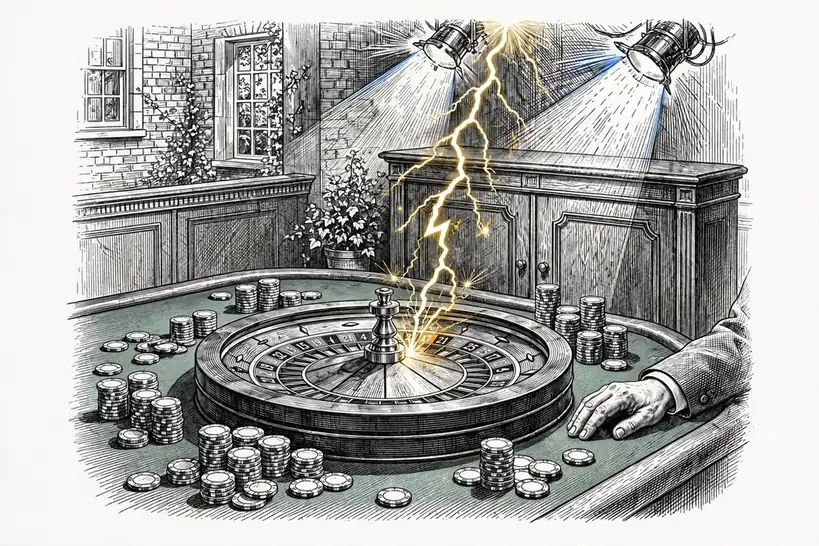
Automated delivery can also make the distinction between game information and visual presentation clearer. A regulated online casino must display the Return to Player (RTP) for each game. RTP describes the designed long-term return across a very large number of rounds; it does not predict the result of a particular session. The displayed figure should therefore be considered alongside the house edge rather than treated as a promise of an individual return.
Comparing the two formats
| Feature | Live hi-lo casino | Automated hi-lo online casino |
|---|---|---|
| Game delivery | Streamed table or studio presentation | Software-based game interface |
| Visible host | Dealer or presenter may be shown | No live dealer is required |
| Main attraction | Real-time atmosphere and continuity | Direct, compact online access |
| Regulatory question | Whether the operator is authorised for online gambling | Whether the operator holds a UKGC remote operating licence |
| Mathematical position | Includes a house edge | Includes a house edge |
| Game information | RTP should be available from the licensed operator | RTP must be displayed for the game |
The table format can be more immersive, but immersion should not be confused with improved odds. Likewise, automated play may appear more functional, but speed or simplicity does not alter the built-in mathematical advantage. In both cases, the published RTP is a long-term statistical measure, while the house edge indicates the operator’s designed advantage.
UK availability and site assessment
A live hi-lo casino UK option must satisfy the same basic licensing condition as any other online casino serving customers in Great Britain. A live presentation is not a substitute for a UK Gambling Commission licence, and the label “live” does not establish that a site is authorised. The same principle applies to a hi-lo online casino: the format alone says nothing conclusive about legal status or game quality.
The strongest comparison is therefore between independently distinct features. Live play concerns the way the game is shown. Online automated play concerns the way the software delivers the round. UK regulation concerns whether the operator is permitted to provide the service. RTP disclosure concerns the mathematical information made available for the game. These categories should not be merged into a single claim about which format is superior.
Searches for a best live hi-lo casino UK option often reflect a preference for table presentation rather than an objectively established ranking. The available facts do not support naming one operator as universally best. A reasoned comparison can, however, distinguish a streamed live table from an automated game and confirm that the relevant UK licensing and RTP information is visible. That approach keeps the assessment tied to verifiable characteristics instead of treating visual style as evidence of fairness or better returns.
Hi-Lo Casinos Available to UK Players in 2026
This list helps UK players reviewing Hi-Lo casino options for 2026 focus on key practical details before choosing where to play. Use each verdict as a quick reference for the available bonus, payout timing, minimum deposit, and licensing information.
License: UKGC Operator Licence · Bonus: £50 bonus · Payout speed: Within 48 hours · Min. deposit: £10 Platinum Gaming Limited holds a UKGC Operator Licence and offers a £50 bonus. Its minimum deposit is £10, with payouts stated as arriving within 48 hours.
License: UKGC Operator Licence · Bonus: £20 bonus · Payout speed: Within 48 hours · Min. deposit: £10 Silverbond Enterprises is listed with a UKGC Operator Licence and provides a £20 bonus. Players can start with a £10 minimum deposit, while payouts are stated as arriving within 48 hours.
License: UKGC Operator Licence · Bonus: £100 bonus · Payout speed: Within 24 hours · Min. deposit: £10 ProgressPlay Limited combines a UKGC Operator Licence with a £100 bonus. It has a £10 minimum deposit and payout timing of within 24 hours.
License: UKGC Operator Licence · Bonus: £100 bonus · Payout speed: Within 24 hours · Min. deposit: £10 Genesis Global Limited is licensed by the UKGC and offers a £100 bonus. The minimum deposit is £10, with payouts stated as arriving within 24 hours.
License: UKGC Operator Licence · Bonus: £200 welcome bonus · Payout speed: Within 48 hours · Min. deposit: £10 32Red holds a UKGC Operator Licence and advertises a £200 welcome bonus. It requires a £10 minimum deposit, while payouts are stated as arriving within 48 hours.
License: UKGC Operator Licence · Bonus: £100 bonus · Payout speed: Within 24 hours · Min. deposit: £10 LeoVegas is listed with a UKGC Operator Licence and offers a £100 bonus. Players can make a minimum deposit of £10, with payouts stated as arriving within 24 hours.
A lawful hi-lo casino serving customers in Great Britain is defined primarily by its regulatory status, not by whether the game is presented through an automated interface or a live table. Any operator offering online gambling to UK customers must hold a valid licence from the UK Gambling Commission (UKGC). For remote gambling, the relevant authorisation is a remote operating licence.
The UKGC operates under the Gambling Act 2005 and maintains a public register of current operating and personal licences. This register provides a way to check the operator’s name or licence number and confirm that the listed domain corresponds with the casino website. The licence requirement applies regardless of where the operator is based. An overseas business serving consumers in Great Britain therefore cannot rely solely on authorisation from its home jurisdiction.
What a UK-licensed hi-lo casino must establish
Licensing involves more than displaying a regulatory logo. The UKGC assesses matters including identity and ownership, finances, integrity, competence, and criminality. Licensed operators are also subject to rules concerning customer protection, advertising, transaction monitoring, and the fairness of gambling products.
UKGC Licensing
The UKGC assesses identity, ownership, finances, integrity, and competence, ensuring operators follow rules on customer protection and fairness.
For a hi-lo game, this means that the operator cannot lawfully offer an unapproved or manipulated product while presenting it as a regulated casino game. The licensing framework covers the gambling service through which the game is supplied. It does not turn every offshore website into a UK-regulated casino, nor does a reference to British customers establish that the necessary authorisation exists.
Age verification is a mandatory condition of play. The general legal gambling age in the UK is 18 for both online and land-based gambling. Operators must verify that a customer is at least 18 before allowing deposits or gambling activity. KYC (Know Your Customer) procedures may therefore be required before full access to an account or before withdrawals are processed. A website that permits hi-lo play without the required age and identity controls does not meet the conditions expected of a UK-facing licensed operator.
Player protection and financial controls
UK-licensed casinos must participate in GAMSTOP, the national self-exclusion system. GAMSTOP can block a registered player from all UKGC-licensed gambling sites for a selected period of six months, one year, or five years. This protection operates across participating licensed operators rather than being limited to one casino account.
Operators must also monitor transactions and intervene where there are clear signs of gambling harm. A customer’s financial circumstances can therefore form part of the operator’s safer-gambling assessment. A profile-based industry review states that financial vulnerability checks apply when net deposits exceed £150 in a rolling 30-day period; this threshold should not be treated here as a universally established market rule without confirmation from the relevant regulator or operator.
Responsible Gambling
Licensed casinos must provide tools like GAMSTOP and monitor transactions to identify signs of gambling harm.
The same distinction applies to financial-limit prompts. A profile-based industry review reports that new customers are prompted to set a financial limit before making their first deposit. Because this point is attributed to a single secondary source, it is better treated as a reported practice than as a complete statement of every operator’s current obligations. The broader regulatory principle remains that licensed casinos must provide responsible-gambling measures and respond to indicators of harm.
Tax and promotional conditions in 2026
Players in the UK pay no gambling tax on casino winnings. The absence of gambling tax on winnings does not remove the need to examine the terms attached to a hi-lo account, including eligibility, restrictions, and withdrawal conditions.
Promotional terms must be stated clearly. A reported rule says that, since January 2026, wagering requirements have been capped at a maximum of 10x. As this condition is relevant to promotional offers rather than the legal definition of a hi-lo casino itself, the applicable terms should still be checked for each offer. Restrictions may concern the games that contribute to wagering, the permitted stake, the expiry period, or the treatment of bonus funds.
Accordingly, the phrase “hi-lo casino UK 2026” describes more than a game category. It refers to a UK-facing online gambling service that has the required UKGC authorisation, verifies age and identity, supports the applicable protection framework, and presents its promotional and financial conditions transparently. Live hi-lo casinos and automated hi-lo games fall within the same licensing context when they are offered online to customers in Great Britain.

What Makes a Strong Hi-Lo Casino Site
A strong hi-lo casino site is not defined by a promotional slogan or by the number of games displayed on its homepage. Assessment depends on whether the site provides enough information to establish what is being offered, how outcomes are generated, and which conditions apply before money can be withdrawn. This is particularly important when comparing UK-facing sites described as among the best hi-lo casino options, since the label itself is not an independent quality measure.
Clear information about the game
The hi-lo game should be identifiable before play begins, with the relevant rules, stake controls, and outcome information presented in a readable form. A site that explains whether the game is automated or live, identifies the game provider where applicable, and states the available limits allows its offer to be assessed without relying on promotional language.
Game information should also distinguish the prediction from the result. The player is selecting whether the next outcome will be higher or lower, while the game determines the result through its stated delivery method. Rules should explain what happens when the next card or outcome matches the current value, where that information affects the result. Ambiguous wording makes comparison between hi-lo casino sites less reliable.
Fairness disclosures and statistical information
A credible site should make the game’s fairness framework visible. For an RNG-based game, the operator should identify the relevant testing or certification arrangements and provide the advertised Return to Player (RTP) where applicable. UK-licensed casinos must display the RTP for each game, so missing or difficult-to-locate information is a material weakness when assessing a UK hi-lo online casino.
RTP Calculation
Example: A slot with 96% RTP is designed to return £96 for every £100 wagered on average over millions of rounds.
RTP describes a long-run mathematical expectation across millions of rounds, not the result of an individual session. A slot with 96% RTP is designed to return £96 for every £100 wagered on average over millions of spins; it does not mean that a particular player will receive that amount. Similarly, a game with a 2.7% house edge has a 97.3% RTP. The house edge remains the operator’s built-in mathematical advantage over time.
These figures should therefore be read as technical information rather than as a promise of profit. A site may publish a high RTP while still offering games in which individual results vary substantially. The useful criterion is transparency: the stated figure should be accessible, expressed consistently, and connected to the specific game rather than presented as a general claim about the casino.
Promotion terms that can be checked
Promotions should be assessed through their full terms rather than through the headline value of a Welcome Bonus. The terms should state the wagering requirements, eligible games, maximum bet limits, expiry periods, and any maximum withdrawal caps. A site that displays only the benefit but not the restrictions does not provide enough information for a meaningful comparison.

The supplied promotional evidence is not consistent enough to support one general market figure. A profile review reports that a welcome bonus may require wagering the bonus amount 20 to 40 times before withdrawal, while another source reports a typical offer involving a 100% deposit match and free spins with wagering requirements around 35 times the bonus amount. These descriptions should be treated as examples of reported promotional structures, not as universal conditions.
A separate source reports a 10-times cap on bonus wagering requirements, including a claim that the cap has applied since January 2026. Because this point is attributed to a single source, it should not be presented as an established rule applying to every operator. The operator’s current terms remain the controlling document for any particular promotion.
The arithmetic should also be explicit. Under a promotion requiring 40-times wagering, a £10 bonus would require £400 in qualifying wagering before conversion into cash. That calculation describes the stated condition; it does not establish that such a promotion is favourable.
Practical signs of a dependable site
Several visible features strengthen an assessment of a hi-lo casino:
- A clearly identified operator and UK-facing service.
- Accessible game rules and RTP information where applicable.
- A visible explanation of fairness testing or certification for RNG games.
- Promotion terms displayed before activation rather than hidden after registration.
- Clear information about game restrictions, maximum bets, expiry periods, and withdrawal conditions.
- KYC and age-verification requirements stated without ambiguity.
- Responsible gambling information, including GAMSTOP and recognised support services.
- No suggestion that winnings or results are guaranteed.
The strongest hi-lo casino sites are therefore those that make verification possible. Design quality and the size of a bonus may affect usability, but neither replaces evidence about the game, the mathematics, or the applicable terms. A careful comparison should treat “best hi-lo casino” as a conclusion reached from disclosed criteria, not as a status conferred by advertising.
Hi-Lo Online Casinos: Bonuses, Limits and Payment Rules
Promotional terms can affect the practical value of hi-lo play at UK online casinos more than the advertised headline offer. A Welcome Bonus may include a deposit match or free spins, but the bonus balance is not necessarily withdrawable immediately. The relevant conditions can include wagering requirements, maximum bet limits, game restrictions, expiry periods and maximum withdrawal caps. These terms should be read before a promotion is accepted, particularly where a hi-lo game contributes only partially, or not at all, towards the required wagering.
Bonus Checklist
- Check the wagering requirements multiplier
- Verify eligible games for the bonus
- Note the maximum bet limits during wagering
- Confirm the expiry period of the offer
- Identify any maximum withdrawal caps
Wagering requirements and bonus calculations
Wagering requirements specify how much qualifying play must be completed before bonus funds or related winnings can be withdrawn. The calculation depends on the promotion’s wording. If the requirement applies to the bonus itself, a £10 bonus with a 40x requirement would require £400 of qualifying wagering. This example illustrates why the nominal bonus amount is not the same as cash value.
A single source, a specialist casino review, states that wagering requirements have been capped at 10x since January 2026. That claim should not be treated as a universal description of every promotion without checking the individual operator’s terms. Promotional rules remain decisive: they establish the applicable multiplier, eligible games, maximum stake and any withdrawal restriction.
The same distinction applies to descriptions of Welcome Bonuses that may require wagering the bonus amount 20 to 40 times. Such ranges belong to promotional commentary rather than to the mechanics of hi-lo itself. A promotion attached to an online hi-lo casino can therefore be assessed only from its published terms, not from the size of the advertised headline.
Limits and restricted conditions
Casino bonuses may impose a maximum bet limit while wagering is active. A player who exceeds that limit can risk invalidating the bonus or associated winnings if the terms allow the operator to apply that consequence. Game restrictions are also relevant. A hi-lo title may be excluded, contribute at a reduced rate, or qualify only under a particular promotion.

Expiry periods can prevent an otherwise valid bonus from being completed in time. Maximum withdrawal caps can further restrict the amount convertible into cash. These conditions are separate from the game’s RTP and should not be interpreted as evidence that the underlying hi-lo outcome has changed. RTP describes long-run game mathematics; a bonus determines the contractual conditions attached to promotional funds.
A higher RTP indicates a lower house edge, but it does not guarantee a winning individual session. The same principle applies when comparing a hi-lo game with other casino products. For reference, the remaining 4% of a slot with 96% RTP represents its house edge, but that figure does not establish the RTP or house edge of a particular hi-lo game.
Deposits, age and self-exclusion
UK gambling operators must prevent under-18s from depositing or playing, and the general legal gambling age is 18 for both online and land-based gambling. Payment rules also include a specific restriction: credit cards cannot be used for gambling transactions, and licensed casinos must block credit-card deposits. This prohibition is distinct from the terms governing debit cards or other permitted payment methods; the applicable casino should state its accepted methods and transaction conditions.
GAMSTOP provides a separate protection mechanism. UK online casinos must participate in the scheme, which can exclude a player from all UKGC-licensed gambling sites for six months, one year or five years. The exclusion applies across participating operators rather than only to one hi-lo casino. That makes it a market-wide restriction, not an account-level bonus or payment setting.
Payment Restriction
Credit cards cannot be used for gambling transactions; licensed casinos must block credit-card deposits.
Hi-Lo Casino Sites for Different Ways to Play
Hi-lo casino sites in the UK can be separated by the way the game is delivered rather than by unsupported rankings. The relevant distinction is between automated online play and a live-table presentation. Both formats may appear within the wider online casino market, but their interfaces, pace, and information displays differ.
Automated online play
An automated hi-lo game is delivered through a casino website or app. The player selects the game, views the current card or game state, and makes the next prediction within the interface. The result is generated digitally, so the format is generally structured around immediate interaction rather than a streamed table.
For this type of site, the central eligibility question is regulatory. An online casino serving customers in Great Britain must hold a valid UK Gambling Commission licence. The licence applies to the operator’s remote gambling activity, not merely to the presence of a hi-lo title on the website. A site can therefore be assessed by checking whether the operator and the relevant domain appear on the UKGC public register.
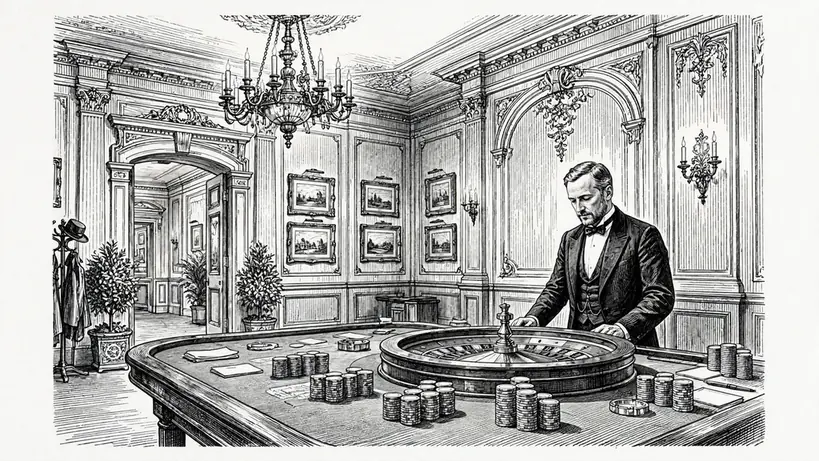
Game information is another practical separator. UK-licensed casinos must display the Return to Player (RTP) for each game. A hi-lo listing that does not identify its RTP provides less information for comparing available games, regardless of how simple the interface appears. The presence of an RTP figure does not predict the result of an individual session, but it identifies the mathematical return used for the game over a large number of rounds.
Live-table presentation
A live-oriented site places greater emphasis on the visual representation of a table, host, or streamed dealing environment. The purpose is not to alter the underlying need for lawful operation, but to reproduce more of the atmosphere associated with a physical casino. Availability depends on the operator’s catalogue and the live-game supply connected to its platform.
The same licensing test remains applicable. A site offering live casino games to UK customers must hold the required UK Gambling Commission authorisation. Its live presentation should not be treated as evidence of fairness or legality by itself. Licence status and the displayed game information remain separate matters.
Comparing the two formats
| Intended use | Relevant site characteristic |
|---|---|
| Fast, automated sessions | A digital interface with clearly stated game information |
| Table-style presentation | A live casino area showing the available streamed format |
| Mathematical comparison | A displayed RTP for the relevant hi-lo game |
| UK access | A valid UKGC licence covering the listed domain |
No independently verified evidence identifies a single best group of hi-lo casino sites. The more defensible approach is to classify sites by delivery format, then exclude any operator whose UKGC status or game information cannot be verified.
Live Hi-Lo Casino Sites and Their Game Formats
Live hi-lo casino sites present a different type of experience from standard automated games. The central distinction is not the prediction itself, but how the next-card result is delivered. A live format uses a streamed table environment, whereas an RNG-based format produces outcomes through software. Both can reproduce the same high-or-low structure, but they create different conditions for observing the game.
Live-streamed hi-lo tables
A live hi-lo online casino may show a real dealer, physical cards, and a studio or table interface through a video stream. The dealer handles the visible game procedure, while the platform supplies the betting interface and records the result for the account. This format is designed to resemble a conventional casino table more closely than a purely graphical game.
RNG
An algorithm designed to produce sequences of numbers that are statistically independent and unpredictable, determining the next card outcome.
The presence of a dealer does not by itself establish fairness or UK availability. A site serving customers in Great Britain must hold the appropriate UK Gambling Commission authorisation, and the relevant domain should correspond with the operator details in the Commission’s public register. A live presentation is therefore a feature of delivery, not a substitute for regulatory status.
Live sites can differ in how much information is displayed around the table. One interface may emphasise the video feed, while another may give greater prominence to the current card, the available high and low choices, and the settlement of the previous round. These differences affect visibility and navigation, but they do not change the underlying meaning of the two predictions.
RNG-based hi-lo formats
An RNG hi-lo game does not use a streamed dealer to determine the next card. Its result is generated by a Random Number Generator, an algorithm designed to produce statistically independent and unpredictable sequences. The game can therefore run continuously within a website or app without a live table, broadcast, or dealer interaction.
For a UK-licensed casino, the RNG must be tested and certified by an independent testing laboratory before the game is offered. Such laboratories test RNG integrity, check that the game mathematics correspond with the advertised Return to Player (RTP), and audit platform fairness. These checks concern the software and its mathematical operation rather than the visual style of the game.
Comparing the two formats
The practical difference between live hi-lo casino sites and automated versions is consequently one of presentation and delivery. Live play centres on a streamed table and dealer-led sequence; RNG play centres on software-generated results. Neither label alone indicates that a game is more favourable. The relevant evidence remains the operator’s UKGC status and the fairness information provided for the specific game.

Choosing a Hi-Lo Casino Site in the UK
Selecting a hi-lo casino site in the UK requires a short verification process rather than a ranking of operators. The first check is licensing. An online casino serving customers in Great Britain must hold a UK Gambling Commission remote operating licence. The operator’s name or licence number can be checked against the Commission’s public register, together with the domain listed there. A site that cannot be matched to the register should not be treated as a lawful UK-facing option.
Age and identity controls are equally important. The legal gambling age for online and land-based gambling in the UK is 18, and licensed operators must verify that players meet this requirement before permitting deposits or play. KYC procedures are therefore part of legitimate account opening, not an optional inconvenience introduced by an individual site.
Game information provides a further screening point. The rules for the hi-lo game, the method used to generate outcomes, and the published Return to Player (RTP) should be accessible before money is deposited. A credible site should also explain its fairness arrangements in clear terms rather than relying only on promotional language. The presence of game information does not remove the house edge, but the absence of basic disclosures makes the offer harder to assess.
Player protection should be visible in the account and help sections. UK-licensed casinos must participate in GAMSTOP, which can exclude a person from all UKGC-licensed gambling sites for six months, one year, or five years. Responsible-gambling information, age controls, and references to support services such as GamCare or BeGambleAware are relevant indicators of the site’s compliance framework.
A suitable hi-lo casino site is therefore one whose licence, domain, age controls, KYC requirements, game disclosures, and protection tools can all be verified. This framework identifies lawful and transparent conditions; it does not establish that any particular operator is the best choice.
What is the best dice casino game for UK players?
There is no single best game for everyone. Check the displayed RTP and house edge: a higher RTP means a lower house edge, although it does not guarantee a winning session.
Can I play dice games for free at UK casinos?
Yes, some casinos may offer free spins on a dice slot as part of a welcome offer. Bonus wagering requirements usually apply before winnings can be withdrawn.
Can I win jackpots from free spins?
Yes, free spins may be included in a welcome offer on a dice slot, but wagering requirements usually apply before bonus winnings can be converted into cash.
Created by the ”Casinouk Bonuses Info” editorial team.