
Curaçao Casino Licence and the UK Market
 Available in GB
Explore how Curaçao licensing affects access, player protections, self-exclusion and casino terms for the British market.

Table of Contents
- What a Curaçao Casino Is and How Its Licence Fits the UK Market
- The Online Casino Experience Beyond the UKGC Framework
- Why Some British Gamblers Consider Non-UK Casino Sites
- Curaçao Casinos That Accept UK Players: Access and Restrictions
- Non-GamStop Casinos and the Consequences of Self-Exclusion
- Curaçao Casinos Outside GamStop: What the Separation Means
- How to Read a Curaçao Casino List Without Treating It as an Endorsement
- How to Check a Curaçao Casino Licence
- Welcome Bonuses, Free Spins and Deposit Terms at Curaçao Casinos
- Curaçao Gambling and Gaming Licences: Regulatory Scope
What a Curaçao Casino Is and How Its Licence Fits the UK Market
A Curaçao casino is an online gambling operator licensed under the regulatory framework of Curaçao rather than under the law of Great Britain. The term describes the jurisdiction connected with the operator’s authorisation; it does not indicate that the casino is licensed by the UK Gambling Commission (UKGC). The same distinction applies to Curacao casinos online that advertise access to British customers, including some Curacao crypto casinos and Bitcoin casinos licensed in Curacao.
More broadly, a non-UK licensed casino operates under a licence granted by a regulatory body outside the United Kingdom. Malta, Gibraltar, Curacao, and Cyprus are among the jurisdictions associated with this model. The governing authority, licence conditions, complaint routes, and enforcement powers therefore depend on the jurisdiction named by the operator, not on the location of the player’s computer or bank account.
Curaçao authorisation is not UKGC authorisation
The UK market has its own licensing framework. Operators providing online gambling services to consumers in Great Britain must hold a UKGC licence, regardless of where the business is based. A remote operating licence is required for online gambling activities in Great Britain, and the UKGC maintains a public register of current operating and personal licences.
This page highlights operators associated with a UKGC Operator Licence for readers researching casino licensing in the UK in 2026. Use the listed bonus, payout speed and minimum deposit details as a quick reference when reviewing each option.
License: UKGC Operator Licence · Bonus: £50 bonus · Payout speed: Within 48 hours · Min. deposit: £10 Platinum Gaming Limited holds a UKGC Operator Licence and offers a £50 bonus. Its stated payout speed is within 48 hours, with a £10 minimum deposit.
License: UKGC Operator Licence · Bonus: £20 bonus · Payout speed: Within 48 hours · Min. deposit: £10 Silverbond Enterprises holds a UKGC Operator Licence and offers a £20 bonus. Payouts are stated to be within 48 hours, and the minimum deposit is £10.
License: UKGC Operator Licence · Bonus: £100 bonus · Payout speed: Within 24 hours · Min. deposit: £10 ProgressPlay Limited holds a UKGC Operator Licence and offers a £100 bonus. Its stated payout speed is within 24 hours, with a £10 minimum deposit.
License: UKGC Operator Licence · Bonus: £100 bonus · Payout speed: Within 24 hours · Min. deposit: £10 Genesis Global Limited holds a UKGC Operator Licence and offers a £100 bonus. Payouts are stated to be within 24 hours, and the minimum deposit is £10.
License: UKGC Operator Licence · Bonus: £200 welcome bonus · Payout speed: Within 48 hours · Min. deposit: £10 32Red holds a UKGC Operator Licence and offers a £200 welcome bonus. Its stated payout speed is within 48 hours, with a £10 minimum deposit.
License: UKGC Operator Licence · Bonus: £100 bonus · Payout speed: Within 24 hours · Min. deposit: £10 LeoVegas holds a UKGC Operator Licence and offers a £100 bonus. Payouts are stated to be within 24 hours, and the minimum deposit is £10.
A Curaçao casino does not become UKGC-regulated merely because it accepts a British registration or displays prices in pounds. If its relevant authorisation comes from Curaçao, it remains a non-UK licensed casino and is not regulated by the UK Gambling Commission. It consequently does not follow UKGC rules as a UKGC-licensed operator would. This is a regulatory distinction, not a description of the games, software, or payment technology offered by the site.
The difference also affects the legal position of the operator. Operators must hold a UKGC licence to advertise or take bets from consumers in England, Wales, or Scotland, and operating without one is a criminal offence. The fact that UK residents are not prohibited from using overseas gambling websites does not remove that requirement from operators serving consumers in Great Britain.
What the label does—and does not—establish
The phrase “Curaçao casino licence” identifies an overseas licensing connection, but it does not by itself establish that the operator has a UKGC licence, follows UKGC requirements, or offers protections equivalent to those available through the British framework. Nor does the label alone establish that every site using it has the same level of supervision or reliability.
Accordingly, the question “are Curacao casinos licensed?” has to be answered precisely. Some operators may hold a Curaçao authorisation, while others may describe their status inaccurately or provide insufficient evidence. A reference to Curaçao is therefore not interchangeable with proof of a valid international licence, and it is not evidence of UK regulatory oversight. The licence jurisdiction should be kept separate from the later assessment of an individual site’s terms, ownership, and conduct.
The Online Casino Experience Beyond the UKGC Framework
Non-UK licensed casinos operate under licences issued outside the United Kingdom, so their online experience can differ from that of UKGC-licensed casinos. The difference is not limited to the name of the regulator. It can affect the catalogue of games, the structure of promotions, the information requested during registration, available payment methods, supported currencies and the handling of withdrawals. Curaçao casinos, including Curaçao online casinos and other overseas platforms, therefore need to be considered as part of a separate regulatory and operational environment rather than as ordinary UK casino sites.
Game choice and software variety
Game selection is one of the most visible differences. Non-UK casinos may list niche table games that are less common on UK-facing platforms, alongside live dealer experiences and releases from smaller or emerging software studios. This can create a broader catalogue across slots, table games and live casino formats, although the presence of more titles does not establish that the games are fair, suitable or better value.
A site described as an online casino in Curaçao may therefore present a different mixture of suppliers from a UKGC-licensed casino. Some platforms may combine familiar products with games from providers that have less recognition among British players. The practical result is greater variation between individual Curacao casino sites: one may emphasise live dealer tables, while another may focus on slots or smaller studios. A wider menu should not be treated as evidence of stronger regulatory supervision.
Game selection in non-UK licensed casinos may include niche table games and emerging software studios not typically found on UKGC-regulated platforms.
The relevant comparison is also between the rules applying to the operator, not merely between the visual design of two websites. Regulatory oversight varies significantly between jurisdictions. Authorities such as the Malta Gaming Authority and Gibraltar maintain rigorous standards, while other jurisdictions may apply less stringent requirements. The licensing location can consequently influence the controls surrounding the casino, even when the games themselves appear familiar.
Promotions and wagering conditions
Promotional structures can also differ. Non-UK casinos may advertise larger welcome bonuses, free spins and more flexible wagering requirements than UK-licensed casinos. The apparent size of an offer is not, however, a reliable measure of its value. Bonus eligibility, game restrictions, withdrawal conditions and the treatment of winnings can all depend on the detailed terms attached to the promotion.
A profile review of overseas casino offers has reported welcome bonuses with match percentages ranging from 200% to 500%. That figure describes the offers examined by that source, not an established market standard. The same caution applies to claims about packages containing hundreds of free spins or cashback without wagering requirements: these are promotional possibilities reported in individual material, not universal features of Curacao online casinos.
Promotions can also be presented in ways that make comparison difficult. A larger headline bonus may be subject to more restrictive conditions than a smaller offer, while free spins may apply only to selected games. Because the regulatory framework is not the UKGC framework, UK assumptions about advertising, bonus presentation or consumer redress should not automatically be transferred to an overseas site.
Registration and account information
Account opening may be quicker on non-UK casino sites. Such operators often allow registration with minimal documentation at the initial stage, rather than requesting the full set of identity documents before an account can be used. This can make the first interaction appear less burdensome, particularly where the site permits deposits soon after basic account details have been entered.

Minimal initial documentation does not necessarily mean that verification will be avoided. A casino may request additional information when a player seeks a large withdrawal or when its internal checks require further evidence. The account-opening process can therefore consist of two different stages: a relatively simple registration followed by more extensive verification before funds are released.
This distinction matters because the apparent speed of sign-up says little about how an account will be handled later. Requirements may differ between operators, and the applicable standards depend partly on the licensing jurisdiction. A smoother registration process should not be interpreted as proof that the operator has fewer compliance obligations overall.
Withdrawals and payment timing
Withdrawal processing is another area in which overseas sites may present a different experience. Non-UK casinos may process withdrawals within hours, while cryptocurrency transactions can be near-instant once the casino has approved the request. The timing still depends on the payment method, the operator’s internal review and any verification required before release of funds.
Cryptocurrency payments may be particularly prominent on some Curacao casino sites. Bitcoin is one example of a supported method, although the availability of digital assets does not remove exchange-rate exposure, transaction risks or the need to understand the operator’s withdrawal terms. A payment appearing technically fast does not guarantee that the underlying withdrawal decision will be immediate.
Currencies and payment methods
Non-UK casinos may support several currencies, including euros, US dollars and cryptocurrencies such as Bitcoin. This can be relevant to British players comparing overseas platforms, since the account balance may not be denominated in pounds. Currency conversion can affect the amount deposited, the value of winnings and the amount received after withdrawal.
Support for various currencies including EUR, USD, and cryptocurrencies like Bitcoin.
Often features a quicker, minimal documentation process during the initial stage.
May offer larger welcome bonuses or more flexible wagering requirements.
Alternative payment methods are also common. Non-UK casinos often accept cryptocurrencies and region-specific e-wallets in addition to more familiar banking options. The range available depends on the individual operator and the player’s location. Some non-UK casinos accept credit cards for deposits, whereas credit-card gambling is banned at UKGC-licensed casinos. Use of a credit card for gambling carries significant responsible-gambling risks and should not be treated as a benefit of overseas access.
These operational differences explain why Curacao online casinos UK searches can produce sites with a noticeably different account and payment model from domestic platforms. They do not establish that one category is safer or more reliable. The central distinction remains regulatory: non-UK licensed casinos are outside UKGC oversight, and the consumer protections and dispute processes available to UK players may not apply in the same form.
Why Some British Gamblers Consider Non-UK Casino Sites
British gamblers may consider a non-UK licensed casino when the available games, promotional terms, payment options or staking arrangements differ from those found at UKGC-licensed casinos. A Curaçao online casino is one example of an overseas service operating outside the United Kingdom’s regulatory framework. That distinction matters: the practical differences can explain interest, but they do not establish equivalent consumer protection or responsible-gambling controls.

Game choice and product variety
One reason for considering an online casino based outside the UK is the possibility of a broader catalogue. Non-UK casinos may carry niche table games, live-dealer formats and titles from smaller or emerging software studios. This can appeal to players who find that the selection at UKGC-licensed casinos is narrower or subject to stricter market requirements.
The presence of a game on a casino online Curacao platform does not, however, demonstrate that the operator has been assessed under UKGC standards. Game availability and regulatory protection are separate questions. A larger catalogue may be commercially attractive while leaving uncertainty about the controls applied to advertising, player protection, complaints and account management.
The same applies when a purported Curacao casino list presents many brands together. A listing can indicate that sites are marketed to a similar audience, but it does not by itself prove that each operator has a valid Curacao online casino licence, uses secure practices or provides accessible dispute resolution. Those issues require separate verification.
Promotional structures
Promotions are another stated reason for examining overseas casinos. A match offer may appear more substantial than comparable UK-facing promotions, and welcome packages can include free spins. A profile review of the sector reports match percentages ranging from 200% to 500% for some non-UK casinos. This is a source-specific observation, not an established market rule, and it should not be treated as evidence that a particular casino online Curacao offer has those terms.
The same caution applies to wagering conditions. A profile review also reports that some non-UK casinos may advertise lower wagering requirements or cashback without wagering. Other offers may contain hundreds of free spins. These descriptions concern promotional structures reported in the market; they do not show the effective value of an offer. Eligibility rules, game restrictions, expiry provisions, maximum winnings and withdrawal conditions can determine whether the headline promotion is usable.
Summary of Differences
- Non-UK casinos operate under different regulatory frameworks than the UKGC.
- Promotional structures and game varieties can differ significantly from domestic sites.
- Registration and payment methods often provide more flexibility but lack UKGC protections.
Consequently, a large bonus is not equivalent to a favourable bonus. If the terms are unclear or restrictive, the apparent value may be difficult to establish before a deposit is made. Promotional size also says nothing about access to UK-based support or the availability of UK responsible-gambling tools.
Payment flexibility
Payment choice can also influence interest in overseas sites. Some non-UK casinos accept credit cards for deposits, whereas credit-card gambling is banned at UKGC-licensed casinos. That difference should not be framed as a consumer benefit. The ability to fund gambling with borrowed money can increase financial risk, particularly where the operator does not provide the same UK regulatory safeguards.
Non-UK casinos may also support currencies other than sterling, including euros, US dollars and Bitcoin, alongside alternative payment methods such as cryptocurrencies and region-specific e-wallets. This may be relevant to account holders who already use those systems or who prefer not to convert funds through a conventional bank.
Payment flexibility does not remove questions about fees, exchange rates, transaction records, verification or withdrawal disputes. A method that is available for deposits may not be available for withdrawals, and the existence of a payment logo does not confirm that every transaction will be processed under the same conditions. The licensing jurisdiction also affects where a complaint can be taken if funds are delayed or an account is restricted.
Verification and account opening
A profile review reports that some non-UK casinos use less demanding KYC procedures during initial registration, with more documentation requested when a substantial withdrawal is made. This can make account opening appear faster, but it may also defer the point at which identity, source-of-funds or payment checks become relevant.

Reduced friction at registration should therefore not be confused with reduced obligations. Verification can still arise later, including when winnings are withdrawn or account activity requires review. A delayed request for documents may be inconvenient if deposits have already been made and the account holder has assumed that access to funds was unconditional.
Stake limits
Staking arrangements provide another possible distinction. A source-specific profile account states that UKGC rules impose a maximum stake of £2 per spin on online slots. The same account contrasts this with non-UK casinos, which generally do not have universal maximum stake limits across games. The comparison describes a regulatory difference, not a recommendation to use higher stakes.
The absence of a universal limit may be relevant to gamblers seeking stakes that are unavailable under UKGC rules. It also removes one external barrier against rapid losses. A broader staking range is therefore not evidence of stronger player protection, and it should not be presented as proof that an overseas casino is safer or more suitable.
These factors explain why some British gamblers examine non-UK licensed casinos, including services described as Curacao online casino or online casino Curacao platforms. They do not establish that a best Curacao online casino exists as an objective category, nor that any casino Curacao online service provides protection equivalent to a UKGC-licensed casino. Overseas licensing, promotional appeal and payment flexibility remain distinct from UK oversight, UK self-exclusion coverage and access to UK-based support services.
Curaçao Casinos That Accept UK Players: Access and Restrictions
Some Curaçao-licensed online casinos may accept registrations from people in the United Kingdom, but acceptance does not place those operators within the British regulatory system. A casino licensed in Curaçao remains subject to the jurisdiction that issued its licence, while online gambling operators serving consumers in Great Britain must hold a licence from the UK Gambling Commission. The two forms of oversight are therefore not interchangeable.
Regulatory Distinction Accepting UK players does not mean the operator is regulated by the UK Gambling Commission.
The distinction matters even where a website displays familiar payment options, advertises games in English, or permits a UK address during registration. Those features may indicate that the operator is willing to serve British customers, but they do not establish that the operator holds a UKGC licence. A Curaçao online casino accepting UK players is still an overseas service, and its regulatory duties arise primarily from its own licensing jurisdiction.
What UK players may not receive
UKGC-licensed casinos operate within rules designed for the British market. A Curaçao-licensed operator is generally not bound by the UKGC’s advertising restrictions, bonus limitations, or self-exclusion guidelines. The practical effect is that protections familiar from UKGC-licensed casinos may not be available in the same form, or may not apply at all.
This also affects complaints. For a UKGC-licensed casino, the UKGC public register identifies the operator and its licence status, while the British regulatory framework defines the relevant compliance obligations. A dispute involving a Curaçao casino instead depends on the operator’s internal complaints process and, where available, the licensing body’s dispute-resolution arrangements. Their accessibility and scope may vary for UK players.
Jurisdictional separation can limit the remedies available to a customer in Great Britain. Consumer protections and dispute-resolution processes associated with the UK market may not apply to a non-UK licensed casino. A complaint may therefore have to be handled under the operator’s terms and the rules of the overseas authority, rather than through a British regulator.
Access is not evidence of equivalent protection
Search results and promotional pages may describe Curacao eGaming licence online casinos, Curaçao casinos online for real money, or crypto-focused operators as available to British customers. Such descriptions concern access, not a finding that the service is safe, suitable, or equivalent to a UKGC-licensed casino. The same applies to pages presenting a Curaçao licensed online casinos list: inclusion on a list cannot by itself establish current licensing status, fair treatment, or effective complaint handling.
The phrase “not on GamStop” also describes a regulatory separation rather than a quality mark. A Curaçao casino may be outside British self-exclusion arrangements, but that fact does not demonstrate stronger consumer protection. It is particularly important not to interpret the availability of an overseas account as confirmation that the operator is authorised to advertise or take bets from consumers in Great Britain.
Accordingly, “accepts UK players” should be read narrowly. It indicates that an overseas operator may permit access from the United Kingdom; it does not transfer the operator into the UKGC framework, guarantee access to UK-based remedies, or establish that the site provides the safeguards associated with British regulation.
Non-GamStop Casinos and the Consequences of Self-Exclusion
GamStop is a UK self-exclusion service designed to prevent registered users from accessing participating online gambling operators. Non-UK casino sites, including overseas sites operating under a Curaçao licence, are not affiliated with GamStop. They are therefore not required to apply its exclusion checks or block accounts held by people registered with the scheme.
This separation explains why a person who has self-excluded through GamStop may still be able to open an account or attempt to gamble at an overseas casino. The technical availability of access should not be interpreted as evidence that the site is suitable, safe, or legally equivalent to a UKGC-licensed casino. It means only that the operator is outside the network through which GamStop exclusions are enforced.
GamStop and Overseas Casinos
Non-UK casino sites, including those under a Curaçao licence, are not affiliated with GamStop. This means they are not required to apply its exclusion checks or block accounts held by people registered with the scheme.
Why self-exclusion may not carry across borders
UKGC-licensed operators must operate within the British regulatory framework, whereas non-UK licensed casinos are supervised under the rules of their own jurisdiction. Their regulatory independence can also affect consumer protection and dispute resolution. Processes available through UK gambling regulation may not apply when a dispute concerns an overseas operator.
Non-UK casinos are generally not bound by UKGC self-exclusion guidelines, advertising restrictions, or bonus limitations. As a result, a player’s decision to exclude through GamStop does not automatically create a corresponding restriction on every international gambling website. A Curaçao casino accepting UK players may consequently remain accessible even when a UK operator would be required to refuse access.
This does not establish that a Curaçao casino is legal in the UK, nor does it answer whether such a casino is safe for a particular person. The relevant issue is not merely whether registration is technically possible, but whether continued access conflicts with an existing decision to stop gambling.
The risk for people experiencing gambling problems
For people who have joined GamStop because gambling has become difficult to control, access to casinos outside the scheme presents a serious risk. The absence of a block removes one of the practical barriers created by self-exclusion. It can make an earlier protective decision easier to bypass, particularly when an overseas site presents itself as a casino for UK players without participating in UK self-exclusion arrangements.
Searching for Curaçao casinos not using GamStop can therefore reflect a vulnerability rather than an ordinary licensing preference. Describing such sites as exempt from GamStop may be technically accurate in the sense that they are outside the scheme, but the wording can conceal the consequence: the exclusion does not follow the player to that operator.
Self-exclusion is not a guarantee against gambling access across every jurisdiction. Its effectiveness depends partly on the operators and services covered by the scheme. Overseas access should not be treated as a workaround for a restriction adopted to address gambling harm. Existing self-exclusion does not demonstrate that gambling at a non-UK licensed casino is controlled or appropriate; it indicates that additional caution and support may be necessary. UK-based help services such as GamCare, BeGambleAware, and Gamblers Anonymous may provide relevant support, while the overseas operator cannot be assumed to offer protections equivalent to those required within the UK framework.
Curaçao Casinos Outside GamStop: What the Separation Means
Curaçao casinos outside GamStop are separate from the UK self-exclusion system because they are not affiliated with GamStop. The distinction is regulatory and operational, not a statement that such sites are suitable for British players. A casino operating under a non-UK licence does not become part of GamStop merely because it accepts customers from the United Kingdom or uses familiar gambling products.
GamStop is designed to prevent registered users from accessing participating online gambling operators. Non-UK casino sites that do not participate in the scheme therefore do not receive the same exclusion instruction and are not required to block a player solely because that person has registered with GamStop. In practical terms, a person excluded from UK-facing gambling services may still encounter an account-opening route at an overseas site. The existence of that route does not cancel the original self-exclusion decision.
- Check the specific issuing authority.
- Confirm the legal entity matches the website operator.
- Verify the licence number through the official regulator.
- Do not assume a larger bonus equals better value.
- Do not treat a website listing as a formal endorsement.
- Do not equate overseas access with UK consumer protections.
What the separation removes
The central limitation is the absence of UK-wide self-exclusion coverage. A GamStop registration cannot be treated as a universal barrier across every jurisdiction, and a Curaçao casino not covered by GamStop does not provide an equivalent substitute. Any internal restriction offered by the individual operator would be separate from the national scheme and should not be assumed to transfer between unrelated sites.
This separation also affects the surrounding safeguards. Consumer protections and dispute-resolution processes available to players in the UK may not apply to a non-UK licensed casino because the operator remains subject to the jurisdiction in which it is licensed. A complaint about access after self-exclusion, account handling or a refusal to honour an internal restriction may therefore depend on the operator’s own process or the relevant overseas licensing body. That is materially different from treating GamStop participation as a shared UK control.
The phrase “not affected by GamStop” can consequently be misleading if it is read as a quality indicator. It describes the absence of participation in the scheme, not stronger supervision, better consumer protection or a safer gambling environment. Nor does “not regulated by GamStop” accurately describe GamStop’s role: GamStop is a self-exclusion service, while licensing and regulatory supervision belong to separate authorities.
Relevance for people at risk
For anyone experiencing difficulty controlling gambling, access to Curaçao casinos not signed up to GamStop represents a serious risk rather than a neutral convenience. The technical availability of an overseas account can undermine the protective purpose of self-exclusion. It may also create the impression that exclusion has failed, when the actual position is that the site falls outside the scheme’s participating network.
Accordingly, the absence of GamStop coverage should be treated as a significant limitation on safeguards. It does not establish that every Curaçao operator behaves identically, but it does establish that GamStop cannot be relied upon to block access there. UK self-exclusion protection and the protections associated with UK gambling arrangements should not be presumed to follow a player into a separate regulatory jurisdiction.
How to Read a Curaçao Casino List Without Treating It as an Endorsement
A Curaçao casino list is not, by itself, evidence that every listed website is licensed, supervised, or suitable for British players. Such a list may collect brands associated with Curaçao, but it does not necessarily identify the legal operator behind a domain, the exact licensing status, or the authority responsible for handling complaints. A directory and a regulatory register therefore serve different purposes.
Three separate questions should be kept apart:
- Is the website listed? This establishes only that the site appears in a particular directory or article.
- Is the operator licensed? This requires confirmation of the operator’s identity, the relevant licence, and the licensing authority.
- Is the service trustworthy? This requires evidence extending beyond a licence, including meaningful information about supervision, dispute handling, and the operator’s conduct.
The expression “Curaçao licensed casino” can therefore be misleading when it is used as a general quality label. A licence indicates a regulatory relationship; it does not automatically establish that consumer protections available in the United Kingdom apply. For non-UK licensed casinos, dispute resolution may depend on the casino’s own process or on the licensing body. Accessibility for UK players can vary, and UK consumer protections may not apply because the operator is legally independent of the UK framework.
What a list can and cannot show
A purported Curaçao licence casino list may be useful as an index for further checking, but it should not be treated as a recommendation. It may help identify names requiring verification, while leaving unanswered whether the listed domain is operated by the named licensee or whether the licence remains relevant to that service.
The same caution applies to Curaçao casino reviews. A review can describe a website’s games, including a Curaçao slot selection, payment options, or account features, but descriptive coverage is not regulatory confirmation. Commercial or editorial incentives may also affect how prominently risks and complaints are presented. No verified operator evidence is available here to support named recommendations.
Are Curacao casinos licensed?
Some operators hold a Curaçao authorisation, but this is not the same as being regulated by the UK Gambling Commission.
Can I use a credit card at overseas casinos?
Some non-UK casinos accept credit cards for deposits, though this is banned at UKGC-licensed casinos.
Does a Curaçao licence guarantee safety?
No, a licence indicates a regulatory connection to a specific jurisdiction but does not guarantee protections equivalent to the UKGC.
Regulatory standards differ between jurisdictions. Malta and Gibraltar are associated with comparatively rigorous oversight, whereas other authorities may apply less stringent requirements. The regulator’s identity therefore matters more than the appearance of a brand on a list. Under Anjouan law, Anjouan Gaming is the designated authority for licensing and supervising internet gaming operations. That fact identifies the relevant authority for an Anjouan-licensed service; it does not convert a directory entry into an endorsement.
A list is consequently best read as a starting point for verification, not as proof of licensing, reliability, or equivalent protection for UK players.
How to Check a Curaçao Casino Licence
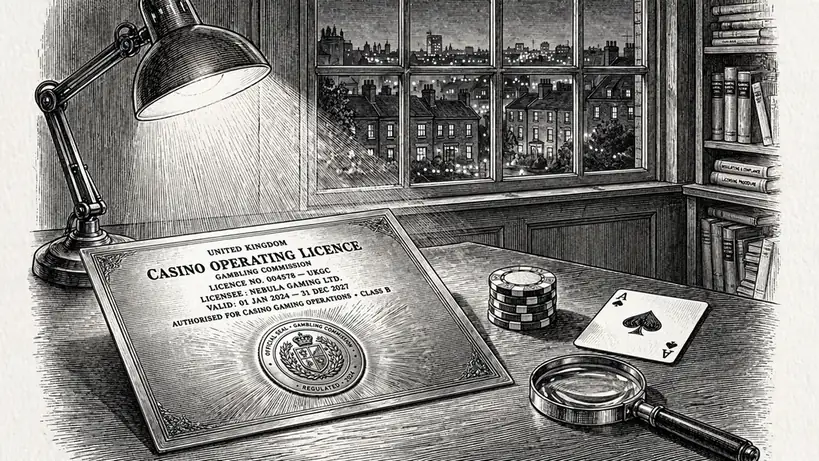
A licence check should establish more than the presence of a logo in a casino’s footer. A credible review asks which authority issued the licence, which legal entity holds it, what activity it covers, and whether the stated domain is connected to that entity. The purpose is to distinguish an identifiable regulatory relationship from an unsupported claim of authorisation.
For a Curaçao casino licence, the operator should provide a licence number or another reference that permits verification through the responsible authority. The name on the licence should correspond with the company operating the website, rather than with an unrelated software provider, payment intermediary, or brand name alone. Any mismatch leaves the legal status of the service unresolved.
The check should also separate three functions:
- Licensing: the authority grants permission to conduct the relevant internet gaming activity.
- Supervision: the authority monitors whether the licensed operation remains within the applicable regulatory framework.
- Enforcement: the authority can respond to breaches, including by suspending or revoking the licence.
These functions are not interchangeable. A licence record, by itself, does not establish that every operational practice has been examined or that a dispute will be resolved in a particular way. It confirms only what the issuing authority recognises within its jurisdiction. Consumer protection available under the UK framework should not be assumed to follow from an overseas licence.
Anjouan Gaming illustrates why the regulator’s powers matter. Under Anjouan law, it is the designated authority for licensing and supervising internet gaming operations. It issues, supervises, and enforces Internet Gaming Licences within its jurisdiction, and has authority to suspend or revoke them. The existence of enforcement powers is therefore a material part of assessing the regulatory arrangement, not a technical footnote.
However, evidence of a valid international licence remains distinct from evidence about the operator’s conduct, ownership, financial position, or dispute handling. A licence check can identify the relevant authority and the scope of its powers; it cannot, without further evidence, establish that an overseas casino provides protections equivalent to those required of UKGC-licensed casinos.
Welcome Bonuses, Free Spins and Deposit Terms at Curaçao Casinos
Promotional offers at Curaçao casinos can look substantially larger than those associated with UKGC-licensed casinos. Common formats include a matched first deposit, free spins attached to selected games, cashback, and offers described as “no deposit”. The wording alone does not establish value: each promotion depends on its eligibility rules, wagering conditions, game restrictions, expiry provisions and withdrawal requirements.
A specialist industry review reports welcome offers with match percentages ranging from 200% to 500% at some non-UK casinos. This is a report about offers identified in that review, not an established market standard. A higher match percentage also does not mean that the resulting balance can be withdrawn freely. The bonus may be subject to wagering requirements, a maximum stake condition, restricted games or a separate cash-out procedure.
Free spins and no-deposit wording
Free spins may be presented as part of a welcome package or as a reward for making a deposit. A no-deposit promotion may not require an initial payment, but it can still impose account-verification, game, wagering or withdrawal conditions. The relevant terms should state whether winnings from the spins are withdrawable and whether a deposit is needed before any withdrawal request can be processed.
Search language around a Curaçao casino no-deposit bonus can therefore describe a promotional format rather than a universally available offer. Availability may depend on the operator, the player’s jurisdiction and the specific terms displayed at registration.
Some non-UK casinos may also advertise lower wagering requirements or cashback without wagering requirements, according to a specialist industry review. That reported feature should not be treated as a general rule. Cashback can still have separate eligibility, calculation and withdrawal provisions.
Deposits and withdrawals
Deposit terms should be read together with the withdrawal policy. A promotion may specify qualifying payment methods, minimum deposit conditions, excluded currencies, maximum winnings or documentation requirements. Non-UK casinos may also apply restrictive or unclear withdrawal terms, leaving the practical value of an apparently generous bonus uncertain.
The same caution applies to searches for the best Curaçao casino slots. A bonus page does not demonstrate that any particular casino, game selection or withdrawal process is the best. Without verified operator-level evidence, promotional size is an inadequate basis for comparison.
Curaçao Gambling and Gaming Licences: Regulatory Scope
The terms gambling licence and gaming licence are often used interchangeably in discussions of Curaçao-licensed online casinos. Their practical meaning depends on the legal framework and the authority that issued the authorisation, rather than on the wording used in casino marketing.
Under Anjouan law, Anjouan Gaming is the designated regulatory authority for licensing and supervising internet gaming operations. Its remit concerns the authorisation of online gaming activity within that jurisdiction. This is distinct from a UKGC licence: an Anjouan authorisation does not place an operator under UK Gambling Commission oversight and does not create access to the UK regulatory framework.
An Internet Gaming Licence under Anjouan law may fall into one of two categories:
- B2C — authorisation for business-to-consumer activity, such as providing online gaming services to players.
- B2B — authorisation for business-to-business activity, such as supplying services or infrastructure to other operators.
The distinction matters when assessing what an apparent Curaçao gambling licence actually covers. A licence connected with a technology provider or other business supplier does not, by itself, establish that the consumer-facing casino is authorised to accept players. The operator, licence category and relevant domain therefore need to correspond.
Licensing is also not an irreversible status. Anjouan Gaming issues, supervises and enforces Internet Gaming Licences within its jurisdiction, and has the authority to suspend or revoke them. The regulatory record includes an Internet Gaming Licence suspended pending investigation. That documented action demonstrates why the existence of a licence should not be treated as permanent proof of compliance or as an endorsement of every service offered under its name.
For British players, the key distinction remains jurisdictional: a Curaçao or other offshore gaming authorisation may describe the operator’s overseas regulatory basis, but it is not equivalent to permission under the UK Gambling Commission’s framework.
Can I use a credit card to deposit at a UK gambling site?
Some non-UK casinos accept credit cards for deposits, but credit card gambling is banned at UKGC-licensed casinos.
What is a UK gambling licence?
A UK gambling licence is authorisation from the UK Gambling Commission for operators providing online gambling to consumers in Great Britain. Operators serving consumers in England, Wales or Scotland must hold the relevant remote operating licence.
What is the fastest withdrawal method at new UK casino sites?
Non-UK casinos may process withdrawals within hours, while cryptocurrency transactions can be near-instant. The available speed depends on the payment method and the casino.
Who do I complain to about a UK casino?
For a non-UK casino, use the casino’s internal dispute process or contact its licensing body. The available complaint route depends on the casino’s licensing jurisdiction.
How do I know if a casino is licensed in the UK?
Check whether the operator holds a current operating licence in the UK Gambling Commission’s public register. A Curaçao or other overseas licence is not proof of UKGC authorisation.
Can I win jackpots from free spins?
Yes, winnings can be generated from free spins, but the promotion’s terms determine eligibility, wagering requirements, game restrictions and withdrawal conditions.
Do I need to deposit to use these spins?
Not necessarily. Non-UK casinos may offer welcome packages containing free spins, but whether a deposit is required depends on the promotion’s terms.
Prepared by the Casinouk Bonuses Info editorial staff.