Deal or No Deal Casino UK: Slots Explained
 Available in GB
Explore the game’s reels, box features, variants, demo options, RTP and house edge across UK casino formats.
Table of Contents
- How Deal or No Deal Slots Work in the UK
- Playing Deal or No Deal Online at UK Casinos
- Deal or No Deal Megaways and The Golden Box
- The Deal or No Deal Slot Machine Experience
- Free Play and Demo Access for Deal or No Deal Slots
- Deal or No Deal Double Action: What the Variant Changes
- What’s in Your Box? Understanding the Slot’s RTP
- The Perfect Play Slot and the Meaning of House Edge
- Deal or No Deal Casino No-Deposit Bonuses in the UK
- Deal or No Deal Scratchcards and Related Formats
How Deal or No Deal Slots Work in the UK
Deal or No Deal slots adapt the structure of a televised game show into a casino game built around reels, symbols, and a potential bonus feature. The central idea is familiar: prize values are represented by boxes, while the player weighs an offer against the possibility of continuing. In a slot, however, the result is not negotiated in the same way as on television. The game’s outcome is determined by its programmed mathematics and Random Number Generator (RNG).
The title therefore combines two formats. The base game follows the conventions of a conventional online slot, while the presentation uses the visual language of Deal or No Deal. Reels spin, symbols form winning combinations according to the published paytable, and additional features may use boxes, offers, or choices to reproduce the tension associated with the show. The exact rules depend on the particular release, so the name alone does not establish a single universal layout or bonus structure.
The game-show format in slot form
A Deal or No Deal slot game normally presents the familiar briefcase or box theme through its artwork, symbols, sound design, and feature screens. Instead of treating the television programme as a direct contest between a contestant and a banker, the slot converts its recognisable elements into randomised game events.
This page helps UK players assess Deal or No Deal casino options using key practical details such as licensing, bonuses, payout times and minimum deposits. Use the short verdicts to identify which operator features may best match your preferences.
License: UKGC Operator Licence · Bonus: £50 bonus · Payout speed: Within 48 hours · Min. deposit: £10 Platinum Gaming Limited holds a UKGC Operator Licence and offers a £50 bonus. Its minimum deposit is £10, with payouts stated as arriving within 48 hours.
License: UKGC Operator Licence · Bonus: £20 bonus · Payout speed: Within 48 hours · Min. deposit: £10 Silverbond Enterprises is a UKGC-licensed operator offering a £20 bonus. Players can start with a £10 minimum deposit, while payouts are stated as arriving within 48 hours.
License: UKGC Operator Licence · Bonus: £100 bonus · Payout speed: Within 24 hours · Min. deposit: £10 ProgressPlay Limited combines a UKGC Operator Licence with a £100 bonus. It has a £10 minimum deposit and states that payouts are made within 24 hours.
License: UKGC Operator Licence · Bonus: £100 bonus · Payout speed: Within 24 hours · Min. deposit: £10 Genesis Global Limited is listed with a UKGC Operator Licence and a £100 bonus. Its minimum deposit is £10, and payouts are stated as arriving within 24 hours.
License: UKGC Operator Licence · Bonus: £200 welcome bonus · Payout speed: Within 48 hours · Min. deposit: £10 32Red holds a UKGC Operator Licence and features a £200 welcome bonus. The minimum deposit is £10, with payouts stated as arriving within 48 hours.
License: UKGC Operator Licence · Bonus: £100 bonus · Payout speed: Within 24 hours · Min. deposit: £10 LeoVegas is a UKGC-licensed operator offering a £100 bonus. It accepts a £10 minimum deposit and states that payouts are made within 24 hours.
The base game is the part played through the reels. A spin produces an outcome, and the paytable explains which symbols or combinations create a return. If the title includes a special feature, it may be activated by particular symbols or another defined condition. A box-selection round can then provide a choice-based presentation, but the available results remain governed by the game’s underlying design rather than by skill or negotiation.
This distinction matters when comparing a Deal or No Deal slot with the television format. Choosing “deal” or “no deal” may be part of the interface, yet the choice does not necessarily allow a player to change the mathematical probability of an outcome. The rules for any such decision should be read in the game information panel, including the conditions that trigger the feature and the way prizes are calculated.
Core elements of a Deal or No Deal slot
Although releases can differ, the main components of a Deal or No Deal slot generally fall into several categories:
- Reels and symbols: the standard slot mechanism produces results through spins and winning combinations.
- A paytable: this sets out symbol values and explains the relevant winning patterns.
- Box or briefcase imagery: these provide the visual connection with the game-show theme.
- Feature rounds: a bonus stage may present offers, selections, or prize values in a format associated with the programme.
- Game information: the rules describe the available features, stake options, and mathematical information required for the title.
These elements make the game recognisable without making every version identical. One Deal or No Deal slot may place greater emphasis on reel play, while another may give more space to a box-based feature. The term “Deal or No Deal slots” therefore describes a family of themed releases rather than one fixed set of rules.
What determines a result
Online casino game outcomes are determined by a Random Number Generator. The RNG produces sequences of numbers that are statistically independent and unpredictable, and the resulting number is mapped to the game’s outcome. The visual animation follows that result; it does not create the result through timing, button presses, or the apparent speed of the reels.
This also applies to a feature that appears to involve a decision. Selecting a box or accepting an offer can be part of the presentation, but the game’s approved mathematics determine how the feature operates. A choice may reveal a result already governed by the game’s design rather than provide a method for overcoming the casino’s mathematical model.
For UK players, a Deal or No Deal slot offered through a licensed online casino must be provided within the UK regulatory framework. Online casino games are legal when the operator holds a UK Gambling Commission licence, and the operator must hold a remote operating licence for online gambling activities. The general legal gambling age for online and land-based gambling in the UK is 18.
Market United Kingdom
Language English
Legal Age 18
Regulatory Body UK Gambling Commission
RTP and the published game information
Return to Player (RTP) is the long-run statistical return assigned to a casino game. UK-licensed casinos must display the RTP for each game, allowing the published figure to be considered alongside the paytable and feature rules. RTP is calculated over millions of game rounds, not over a particular person’s session.
A higher RTP corresponds to a lower house edge, but it does not guarantee an individual winning session. Short-term results can differ substantially from the long-run mathematical expectation. Every casino game is designed with a house edge, meaning that the operator has a built-in mathematical advantage over time.
The practical result is that the Deal or No Deal theme does not alter the basic nature of slot play. Boxes, offers, and familiar television imagery shape the presentation, while the reels, RNG, paytable, RTP, and house edge define the underlying casino game. Specific variants require separate examination because their rules and mathematics may not be interchangeable, even when they use the same title.
Playing Deal or No Deal Online at UK Casinos
Deal or No Deal slots can be accessed through online casino websites and mobile applications rather than through a physical machine. In this setting, the game is presented as a digital casino product: the website or app supplies the interface, while the underlying game software determines the outcome of each round. The relevant UK market consists of operators offering gambling services to customers in Great Britain under the supervision of the UK Gambling Commission.
Access through a website or app
An online casino is a website or app where casino-style games are played over the internet using real money. A Deal or No Deal online slot game therefore sits within the casino’s game catalogue, alongside other digital casino products. Access depends on the operator making the title available in its portfolio and on the player using an account with that operator.
The same general model applies whether the game is opened in a desktop browser or through a mobile application. The screen may be adapted for a smaller display, but the essential arrangement remains digital: the game loads from the operator’s platform, the player selects the available stake, and the software records the result of each completed round. The terms “online slot machine” and “video slot” describe this presentation, not a separate physical device.
The title may also be described as a Deal or No Deal casino game online, a Deal or No Deal game online casino product, or a Deal or No Deal slot game online. These expressions refer to the method of access rather than establishing that every operator carries the same release. Availability is determined by the casino’s current catalogue and the jurisdictions in which it is permitted to provide the game.
The role of UK licensing
Any online casino offering services to customers in Great Britain must hold a valid UK Gambling Commission licence. The Commission oversees gambling activities in Great Britain, including remote gambling supplied through websites and apps. Consequently, the legal status of an online casino is separate from the popularity of its branding or the presence of a particular game title.
A UK-facing operator must hold the appropriate remote operating licence for online gambling activities in Great Britain. This requirement applies regardless of where the business itself is based. A game described as a Deal or No Deal online slot does not become acceptable merely because it can be reached through an internet connection; the operator providing access must be authorised for the relevant activity.
Any online casino offering services to customers in Great Britain must hold a valid UK Gambling Commission licence.
The UK Gambling Commission maintains a public register of current operating and personal licences. The operator name or licence number can be checked against that register, with the listed domain confirmed as part of the process. This matters because a visually similar website, an unauthorised mirror, or an account offered through an unrelated domain does not establish that the service is supplied by the licensed operator.
How outcomes are generated
The outcome of an online slot round is determined by a Random Number Generator, or RNG. An RNG is a complex algorithm that produces sequences of numbers that are statistically independent and unpredictable. In practical terms, the result of one round is not selected because of a player’s previous result or because a particular pattern has appeared on screen.
Before a game is offered by a UK-licensed casino, its RNG must be tested and certified by an independent testing laboratory. Such laboratories examine RNG integrity, verify that the game mathematics correspond to the advertised Return to Player, and audit the fairness of the platform. This testing relates to the software and its mathematical operation; it is not a promise that an individual session will produce a profit.
The Return to Player figure is calculated over millions of game rounds rather than over a single visit to an online casino. It therefore describes a long-run mathematical property of the game, not a forecast for one player’s results. A short session can finish above or below that theoretical return, and the presence of a licensed operator does not alter the random nature of individual outcomes.

What “playing online” involves
Playing Deal or No Deal slots online means using the operator’s digital interface to open the game, select an available stake, and start rounds through the website or app. The game’s visual identity may reproduce the familiar television-style presentation associated with the brand, but the online casino remains the environment in which the transaction and game access occur.
The distinction is useful because three separate elements are sometimes treated as though they were one. The game is the software product; the website or app is the delivery platform; and the operator is the licensed business responsible for providing gambling services in Great Britain. A reference to Deal or No Deal video slots may describe the first element, while “Deal or No Deal online casinos” refers to the third.
This framework also explains why access should not be judged solely by the title displayed on a page. The relevant questions concern the licensed operator, the domain through which the service is supplied, and the certified game software made available on that platform. Where those elements correspond, the online format is the authorised digital route for playing the slot in the UK market.
Deal or No Deal Megaways and The Golden Box
The Megaways label identifies a feature-specific version of the Deal or No Deal concept rather than a universal name for every game based on the television format. A review therefore needs to establish which release is being examined before describing its reels, symbols, bonus features, or mathematical profile. Titles referring to The Golden Box, The Golden Case, or The Big Hit may be used to distinguish related presentations, but the name alone does not prove that the games have identical rules or identical returns.
Features changing ways-to-win mechanics and potentially different reel configurations.
Possible title or feature name used to distinguish specific themed releases.
A related presentation that may have unique rules and mathematical profiles.
What a Megaways version changes
Megaways slots are generally recognised by changing ways-to-win mechanics, but the available facts do not establish the exact reel configuration, symbol counts, bonus triggers, or maximum win for any Deal or No Deal Megaways release. Those details should not be inferred from the brand name. A reliable review would need the individual game rules and paytable supplied for the relevant version.
This distinction matters because a player assessing a Megaways title is not necessarily assessing the standard Deal or No Deal slot. The underlying show theme may remain familiar, while the mathematical model and feature structure can differ. References to a golden box or golden case may likewise describe a named feature, a separate edition, or a marketing title. Without the published rules for that release, the terms cannot be treated as interchangeable.
The same caution applies to Deal or No Deal: The Big Hit Megaways. Its wording suggests a related Megaways presentation, but no verified information here confirms how its features operate or whether its RTP matches another game in the series. A review should therefore identify the exact title displayed by the casino and use that title’s own information rather than borrowing specifications from a similarly branded game.
Reading a review responsibly
RTP is a long-run mathematical measure, not a prediction for one playing session. A slot with 96% RTP is designed to return £96 for every £100 wagered on average over millions of spins. The remaining 4% represents the house edge, the built-in mathematical advantage held by the casino.
That calculation does not mean that a particular deposit, sequence of spins, or bonus feature will return a corresponding amount. Short-term results can differ substantially from the theoretical average. Nor does the presence of a Megaways mechanic, a golden-box feature, or a “big hit” description remove the house edge. The relevant RTP must be taken from the game information for the precise version being considered.
Demo and free-play references
A Megaways demo is a practice presentation rather than evidence of real-money performance. Free play can help clarify the interface, reel movement, symbols, and feature presentation, but it does not establish that the same short sequence would occur with money at stake. It also cannot demonstrate whether a particular RTP has been achieved, because RTP is calculated across millions of rounds.
Consequently, demo access should be understood as a way to inspect a named release, not as a substitute for its published rules or mathematical information. The distinction is especially important when several Deal or No Deal titles use similar references to boxes, cases, or major wins. The exact game name and its displayed terms remain the basis for comparison.
The Deal or No Deal Slot Machine Experience
The phrase “Deal or No Deal slot machine” can describe the presentation of a casino game rather than a particular piece of physical hardware. In a land-based setting, a slot machine is a dedicated gaming terminal with a screen, controls and a mechanism for accepting stakes. Online, the same language refers to a digital version displayed through a casino website or app. The distinction matters because the underlying access method changes, while the game remains governed by its published rules and mathematical model.
- Check the operator’s UKGC licence via the public register.
- Verify the specific RTP for the exact game version being played.
- Assume all themed games share identical rules or returns.
- Rely on visual similarity to confirm a licensed service.
From physical machine to online game
A physical machine presents the game on a cabinet positioned in a licensed gambling venue. Its interface is built around visible controls, such as buttons or a touchscreen, whereas an online version uses browser or app controls. The online format can therefore reproduce the visual language of a machine without being a machine in the literal, hardware-based sense.
For a player in Great Britain, an online casino offering such a game must hold a UK Gambling Commission remote operating licence. The operator must also verify that players are aged 18 or older before allowing deposits or play. KYC is mandatory for UK-licensed casinos, so access to the game is connected with identity and account checks rather than being entirely anonymous.
The regulatory setting also distinguishes a licensed online slot from an unverified game distributed through an unauthorised website. UK-licensed casinos cannot rig their games. Outcomes are determined by a Random Number Generator, and the RNG must be tested and certified by an independent testing laboratory before the game is offered through a licensed casino. Such laboratories test RNG integrity, check that the game mathematics correspond with the advertised Return to Player (RTP), and audit platform fairness.
What “playing the machine” means online
Playing Deal or No Deal through an online casino means placing stakes on individual game rounds using the account balance. The screen may reproduce the visual structure associated with a slot machine, but the result is generated electronically rather than by the movement of physical reels. The relevant question is therefore not whether the game looks like a cabinet machine, but whether the operator and game are presented within the applicable licensed framework.
UK-licensed casinos must display the RTP for each game. RTP is a long-run statistical measure calculated over millions of rounds, not a prediction for one session. A higher RTP corresponds to a lower house edge, but it does not guarantee that a particular session will finish in profit. The displayed figure should consequently be read as information about the game’s mathematics rather than as a promise of a return from a single play.
Free and paid versions
References to a free Deal or No Deal slot machine generally describe a version that can be opened without staking real money. This may be useful for examining the interface and understanding how the machine-style presentation operates, but it does not reproduce the financial consequences of paid play. A free version cannot turn a losing real-money session into a winning one, nor does it establish that a particular casino account offers the same configuration.
When real money is involved, winnings from gambling are not subject to gambling tax for players in the UK. That tax treatment does not remove the importance of the game’s RTP, the operator’s licence, or the conditions attached to the account. The machine concept is therefore best understood as a presentation format: online play may look and feel like a slot terminal, while its legality, fairness controls and mathematical information depend on the licensed digital environment.
RTP
Return to Player is the long-run statistical return assigned to a casino game, calculated over millions of rounds.
Free Play and Demo Access for Deal or No Deal Slots
Free-play versions of Deal or No Deal slots serve a different purpose from real-money gambling. A demo mode allows the game to be opened without placing cash stakes, making it possible to examine the layout, symbols, controls, bonus presentation and general pace of play. It is therefore an introductory tool, not a substitute for a funded casino account.
The distinction matters because an online casino is a website or app where casino-style games are played over the internet with real money. A free demo removes that monetary element. The displayed balance in such a mode is not a withdrawable casino balance, and any winnings shown on screen have no cash value. Likewise, losses in a demo do not represent money lost from a bank account.
What free play can show
Playing Deal or No Deal slots for free can help establish whether the format is understandable and whether the presentation is suitable for the intended use. It may show:
- the reel layout and visible symbols;
- the available stake controls;
- the appearance of feature rounds;
- the way wins are displayed;
- the general speed of individual spins.
These observations are practical rather than predictive. A favourable sequence in a demo does not indicate that the same sequence will occur during paid play. Each round is separate, and the result is generated by the game’s Random Number Generator. An RNG is a complex algorithm that produces sequences of numbers designed to be statistically independent and unpredictable.
Consequently, free spins in a demo should not be confused with promotional free spins attached to a casino offer. Demo rounds are part of an unpaid simulation. Promotional free spins, where available, are governed by the operator’s terms and may be subject to restrictions such as wagering requirements, game limitations, expiry periods or withdrawal caps. Those conditions determine whether any resulting balance can be withdrawn.
Limits of a demo version
A free version cannot reproduce every practical feature of real-money play. It does not test payment procedures, account verification, deposit controls or withdrawals. It also cannot demonstrate how a particular session would perform with money at stake. Emotional reactions to wins and losses may differ substantially when no funds are involved.
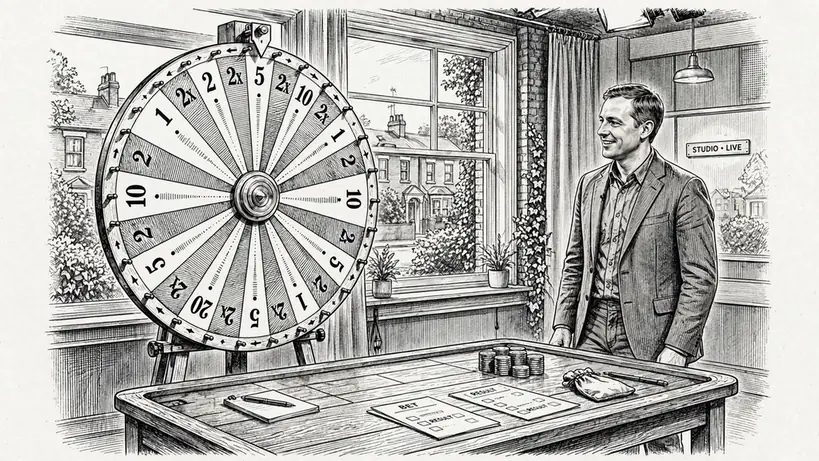
The mathematical information also requires careful interpretation. Return to Player is calculated over millions of game rounds, not over an individual demo session. A short sequence of free spins may therefore appear unusually successful or unsuccessful without providing evidence about long-run performance. Casino games are designed with a house edge, so the operator is expected to profit over time even though individual sessions can produce different outcomes.
Free access is thus best understood as a way to inspect a Deal or No Deal slot before deciding whether to continue. It can clarify the interface and mechanics, but it does not create withdrawable winnings, predict future results or remove the mathematical advantage built into casino play.
Deal or No Deal Double Action: What the Variant Changes
Deal or No Deal Double Action is best treated as a separate game variant rather than as a minor label for the general Deal or No Deal title. A review of the Double Action slot should therefore identify the specific game version being assessed and avoid transferring features, mathematical information, or promotional descriptions from another release.
Double Action variant
Double Action may describe a change in the game’s structure, presentation, or available features.
Reliable information regarding whether it alters ways-to-win or triggers additional rounds must be found in the specific game’s published rules and paytable.
The phrase “Double Action” may describe a change in the game’s structure, presentation, or available features, but the exact difference cannot be established from the title alone. Reliable information must come from the published rules and paytable for that particular release. These materials should explain the winning combinations, bonus conditions, stake options, and any special actions available during play. Without those details, a review can describe the theme but cannot substantiate how the variant changes the underlying experience.
What a Double Action review should verify
The most important published figure is the Return to Player (RTP). UK-licensed casinos must display the RTP for each game, so the figure attached to Double Action should be checked separately from the RTP of any other Deal or No Deal version. RTP is a long-run mathematical measure calculated across millions of game rounds; it does not predict the result of an individual session.
A proper review should also distinguish between the advertised rules and claims made in secondary descriptions. If a feature is said to alter the number of ways to win, trigger an additional round, or change the value of a prize, that claim should correspond with the official game information. A title containing “Double Action” is not, by itself, evidence of a particular mechanic or a more favourable mathematical profile.
Fairness testing provides a further verification point. Before a game is offered by a UK-licensed casino, its Random Number Generator must be tested and certified by an independent testing laboratory. Such laboratories test RNG integrity, verify that the game mathematics match the advertised RTP, and audit platform fairness. This does not make every session profitable; it establishes that the game’s stated operation has been independently examined.
The clearest assessment of the Deal or No Deal Double Action slot therefore combines the variant’s published rules, its displayed RTP, and the fairness framework applying to UK-licensed casino games. Where any of these details are unavailable, the limitation should be stated rather than replaced with assumptions based on the broader Deal or No Deal brand.
What’s in Your Box? Understanding the Slot’s RTP
For the Deal or No Deal What’s in Your Box slot, Return to Player (RTP) is the key published measure of long-run mathematical return. It does not describe the contents of a particular box, predict the result of the next spin, or show what a single session will produce. Instead, RTP is calculated across millions of game rounds.
This distinction matters because individual outcomes remain separate from the theoretical return. A player may experience a result above or below the stated RTP during a short period. The figure becomes meaningful only as a statistical property of the game over a very large number of spins. It is therefore unsuitable as a promise of profit or as a forecast for one visit.
How the percentage is read
A slot with 96% RTP is designed to return £96 for every £100 wagered on average over millions of spins. The calculation describes the game’s aggregate mathematical behaviour, not a cash refund attached to each £100 played. The £96 may be distributed across many players and rounds, while any individual result can differ substantially.
The remaining 4% represents the house edge. This is the built-in mathematical advantage retained by the casino over the long term. RTP and house edge are therefore complementary measures: together, they describe the relationship between the theoretical return to players and the operator’s expected advantage.
Attention Short-term results can differ substantially from the theoretical RTP, and a single session does not guarantee a return.
For What’s in Your Box, the relevant RTP should be taken from the game information displayed by the UK-licensed casino offering it. The published percentage is the appropriate reference point for assessing the slot’s mathematics, provided it corresponds to the exact game version being played. A title name alone is not enough to establish a particular RTP where different releases or configurations exist.
RTP cannot identify whether the next spin will win, determine the value of a future prize, or establish that a session will finish positively. Its role is narrower and more precise: it expresses the game’s long-run expected return. That makes it useful for comparison, but not a basis for certainty about short-term play.
The Perfect Play Slot and the Meaning of House Edge
The Perfect Play version of Deal or No Deal is best assessed through its published mathematical return rather than through the appearance of its theme or the outcome of a short session. The term “perfect play” can suggest that a particular strategy removes the casino’s advantage. In a slot, however, the relevant mathematics remain built into the game. Individual spins are separate outcomes, and a favourable result in one sequence does not establish a reliable method for future play.
What house edge means
House edge is the built-in mathematical advantage that the casino has in a game. It describes the proportion retained by the operator over a sufficiently large number of rounds, not a fee deducted from every individual spin. A player can therefore finish a session ahead, at break-even, or below the amount staked, even when the game’s long-run return is known.
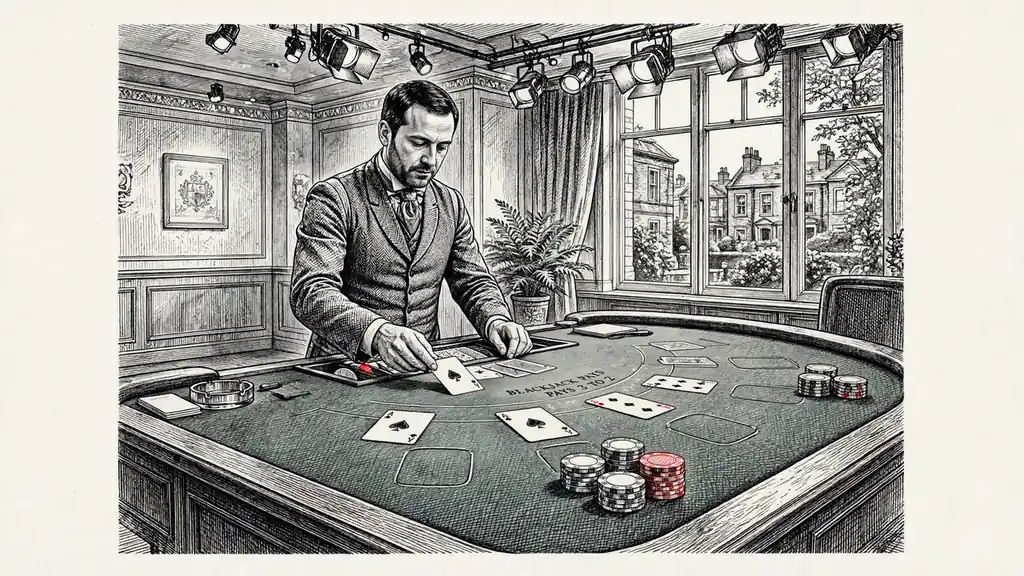
RTP and house edge express opposite sides of the same calculation. Higher RTP means a lower house edge, but it does not guarantee an individual winning session. A game with a 2.7% house edge has a 97.3% RTP. The remaining percentage represents the designed mathematical advantage for the operator over the long term.
Interpreting a Perfect Play listing
A listing for Deal or No Deal: The Perfect Play should therefore be read as a description of a named variant, not as evidence that perfect decisions can overcome the game’s structure. Unless the published information provides a verified RTP, volatility, and feature specification for that exact version, its mathematical performance cannot be inferred from the title alone.
The distinction matters because promotional language and game naming describe presentation, while house edge describes probability. A strong-looking feature, a successful bonus round, or a profitable short run may alter the result of one session without changing the underlying advantage. Conversely, an unfavourable session does not prove that the game has malfunctioned.
The most precise assessment is consequently limited to the figures disclosed for the specific Perfect Play release. Where those figures are unavailable, claims about its expected return remain unsubstantiated. The name may identify the variant, but it does not remove the casino’s built-in mathematical advantage.
Deal or No Deal Casino No-Deposit Bonuses in the UK
A no-deposit bonus associated with Deal or No Deal casino play is a promotional offer that does not require an initial deposit. Its presence does not mean that any winnings are immediately withdrawable. The decisive information is contained in the promotion’s terms and conditions, which should identify eligibility, the qualifying game, wagering requirements, expiry rules, maximum bet limits, and any withdrawal cap.
Bonus Terms
- No-deposit bonuses require checking specific wagering requirements and expiry rules.
- Bonuses may be limited to certain games or new customers only.
- Winnings might only be withdrawable after fulfilling all promotional conditions.
UK-licensed operators must state promotional conditions clearly. A casino offering online gambling to customers in Great Britain must hold a UK Gambling Commission remote operating licence, and KYC is mandatory. Age verification is also required before deposits or play are allowed; the general legal gambling age is 18. These requirements apply regardless of whether the offer is described as a Deal or No Deal bonus, a free-play promotion, or a no-deposit reward.
What the conditions determine
The phrase “no deposit” describes only the entry condition. It does not remove other restrictions. A bonus may be limited to new customers, one account, a specified game, or a defined promotional period. The terms may also require identity verification before any withdrawal is processed. A financial limit must be prompted for new customers before their first deposit; a profile-specific affiliate review reports this as part of the onboarding process, but it should not be treated here as a universal market rule for no-deposit offers.
Wagering requirements are particularly important. A profile-specific affiliate review states that bonus wagering is capped at 10x, with the cap applying from January 2026. Because this point comes from a single review rather than the general UKGC facts listed here, the operator’s current terms remain the controlling document for a particular promotion. If a no-deposit offer imposes wagering, the required amount must be completed before eligible winnings can be withdrawn.
The bonus balance and any associated winnings may also be forfeited if the promotion expires or its conditions are breached. Consequently, the value of a no-deposit Deal or No Deal offer cannot be assessed from its headline alone; eligibility and withdrawal terms determine its practical value.
Deal or No Deal Scratchcards and Related Formats
A Deal or No Deal scratchcard is a separate gambling format from a Deal or No Deal slot. The shared name may refer to the television game-show theme, but the underlying product, rules and method of play can differ. A scratchcard generally presents a concealed result that is revealed by removing a printed or digital covering, whereas a slot uses programmed game rounds. The two should therefore not be treated as interchangeable versions of one product.
Physical and Digital Scratchcards
A physical scratchcard is a ticket-based product sold through an authorised gambling channel. A digital equivalent may appear within an online gambling service, but its presentation does not change the regulatory context. Where a product constitutes gambling for consumers in Great Britain, the relevant operator must hold the appropriate UK Gambling Commission authorisation. The Commission oversees gambling activities in Great Britain, including licensed gambling supplied online and through land-based channels.
The title alone does not establish that a particular Deal or No Deal scratchcard is available, licensed, or connected with a specific operator. Availability, branding and rules depend on the product issuer and distribution channel. Product information should therefore be distinguished from the television programme and from casino slots using the same theme.
Rules, Cost and Outcomes
Scratchcard outcomes are determined by the terms of the individual product rather than by assumptions drawn from a slot. Important information can include the price of a physical ticket, the purchase conditions for a digital product, the prize structure and any stated claim restrictions. These details must come from the relevant licensed provider; they cannot be inferred from the Deal or No Deal branding.
As with other casino-style gambling products, the mathematical design includes a house edge. This means the operator is intended to profit over time, while an individual scratchcard can produce a different result. A favourable outcome is not evidence that the format is profitable overall, and a losing ticket does not indicate that a later ticket is due to win.
Participation is restricted to adults. The general legal gambling age in the UK is 18 for both online and land-based gambling. The regulatory status of the provider, rather than the familiarity of the game-show name, is the essential distinction when assessing a Deal or No Deal scratchcard or related format.
Written by the editors at Casinouk Bonuses Info.