
Responsible Gambling in the UK: Rules and Support
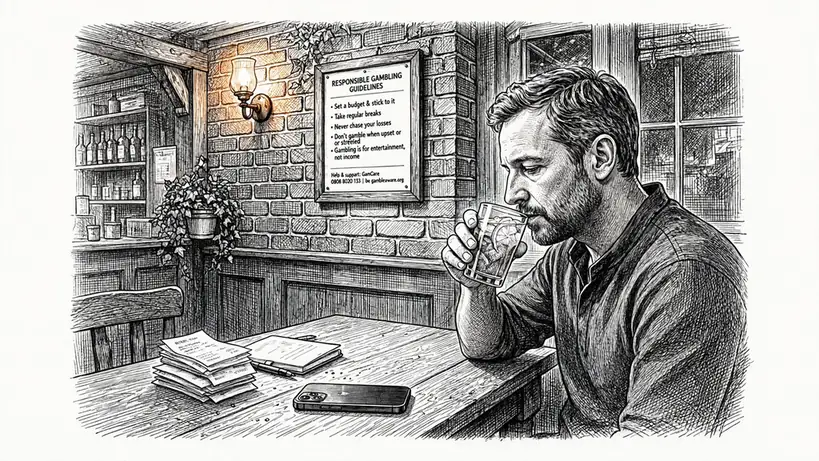
Gambling in the United Kingdom: A Regulatory Overview
Gambling is legal in the United Kingdom only within a framework administered by the Gambling Commission (UKGC). Operators must hold a UKGC licence to advertise or take bets from consumers in England, Wales, or Scotland, and operating without such a licence is a criminal offence. The legal gambling age is 18 for the general market. No form of gambling is legal under the age of 16, and parental permission does not override this law. Applicants for a UKGC licence must themselves be 18 or over.
Licence status can be verified independently. The UKGC maintains a public register of current operating and personal licences. A casino licence can be checked by matching the operator name or licence number against this register and confirming the listed domain. UKGC licensees are subject to annual reporting, security audits, responsible gambling policies, and anti-money laundering checks.
Recognising Problem Gambling
Problem gambling is generally identified through observable patterns of behaviour rather than a single event. Indicators that are frequently documented in the clinical literature include:
- Spending more money or time on gambling than originally intended;
- Repeated unsuccessful attempts to cut down or stop;
- Chasing losses — placing further bets specifically to recover money already lost;
- Borrowing money, including through credit, to fund gambling;
- Concealing the extent of gambling from family members or colleagues;
- Neglecting work, study, or personal obligations as a result of gambling;
- Continuing to gamble despite recognising its negative consequences.
The presence of one or more of these patterns does not constitute a diagnosis; it does, however, provide a reasonable basis for seeking an assessment or using self-exclusion tools.
Gambling is not a source of income and is not a method for resolving financial difficulties. Games offered by licensed operators are structured so that the operator holds a mathematical advantage over time. Losses are a normal and expected outcome of continued play, not an anomaly that further play can correct.
Self-Restriction Tools in the UK Market
UK-licensed operators are required to offer a defined set of player controls. Licensees must provide deposit limits, loss limits, session-time reminders, reality checks and self-exclusion options, and must prompt players to set a deposit limit before their first deposit. All gambling businesses must also have their own self-exclusion procedures. Casino-level self-exclusion can range from one day to permanent.
GAMSTOP is the national online self-exclusion scheme. Participation has been mandatory for online gambling operators since March 2020, meaning all remote operators in the UK market are members. A single GAMSTOP request excludes a player from all UKGC-licensed gambling sites for six months, one year, or five years. The minimum self-exclusion period specified for remote operators is six months.
Operators are prohibited from accepting payment for gambling by credit card, including payments routed through an e-wallet or money service business funded by credit. E-wallets are accepted only where the provider can demonstrably prevent credit-card use for gambling through the wallet. Players must be able to stop playing at any time and retain their remaining deposit and winnings earned from that deposit.
Recent regulatory changes add further protections. From 28 February 2025, remote operators must run light-touch financial vulnerability checks on customers with net deposits exceeding £150 in a rolling 30-day period. From 9 April 2025, online slots are subject to a £5 per spin limit for players aged 25 and over. UK licensed operators are also required to have procedures for identifying potential gambling-related harm, and the UKGC requires operators to contribute financially to organisations focused on research, prevention, and treatment of gambling-related harm.
Where to Get Help
Confidential and free support services operate across the United Kingdom. The National Gambling Helpline (https://www.nationalgamblinghelpline.org.uk) and the NHS Wales Helplines (https://www.wales.nhs.uk/services/mental-health/addiction-services) are free of charge and available 24 hours a day, 7 days a week.
- National Gambling Helpline (England and Scotland): 0808 8020 133
- NHS Wales Helpline (Wales): 0808 2819 265
- GamCare — https://www.gamcare.org.uk. GamCare’s National Gambling Helpline is available 24/7 on 0808 8020 133.
- National Gambling Treatment Service — https://www.nationalgamblingtreatment.org.uk
- GambleAware — https://www.gambleaware.org
- GamStop — https://www.gamstop.co.uk. Registration takes place online and applies across all UKGC-licensed gambling sites.
Contacting a helpline does not commit the caller to any programme of treatment. Helplines provide information, confidential discussion, and referral where appropriate.
Summary of Practical Steps
- Verify the licence. Check the operator name or licence number against the UKGC public register before depositing.
- Set limits before playing. Use deposit and loss limits, session-time reminders, and reality checks offered by all UK licensees.
- Register with GAMSTOP if online gambling needs to be stopped across all licensed sites at once.
- Contact a helpline if the behavioural indicators listed above are present. The services above are free, confidential, and available at any hour.
For questions regarding this page, contact Casinouk Bonuses Info at [email protected].