Best 3-Reel Slots in the UK: Classic Games Explained
 Available in GB
Explore the format, symbols, paylines and playing options behind traditional three-reel games in UK online casinos.
Table of Contents
- What Defines a Three-Reel Slot
- Three-Reel Slot Games and Machines
- Three-Reel Slots for Real-Money Play
- Classic and Free Online Three-Reel Slots
- Playing Classic Three-Reel Slots Online for Money
- Three-Reel Fruit Machines: Paylines and Odds
- No-Download and No-Deposit Three-Reel Slots
- The Three-Reel Slot Format in UK Online Casinos
- Classic Three-Reel Slots and Their Traditional Design
- Classic Slots Versus Video Slots
What Defines a Three-Reel Slot
A three-reel slot is a slot game built around three vertical reels. Each reel contains a sequence of symbols, and the result is created when the reels stop after a spin. The format is narrower than slot games with four or five reels, but the underlying principles remain the same: symbols appear in defined positions, winning combinations are assessed against active paylines, and a random number generator determines the outcome.
The term describes the reel structure rather than a particular theme, operator, or payment method. A three-reel game may have a fruit-machine appearance, a branded design, or a purely digital presentation. It may also be available through an online casino or reproduced by a physical machine. The essential characteristic is the presence of three reels used to form the displayed result.
Reels, symbols and the visible result
Each reel contains symbols arranged in an internal sequence. The screen shows a visible section of every reel, creating the arrangement examined after the spin. Symbols can represent traditional fruit, bells, bars, sevens, themed images, or other game-specific graphics. Their purpose is not merely decorative: particular combinations may correspond to prizes, while some symbols can activate additional game functions.
This page highlights operators worth considering when choosing a UK casino for the best 3-reel slots in 2026. Use the listed licence, bonus, payout-speed and minimum-deposit details as a quick starting point.
License: UKGC Operator Licence · Bonus: £50 bonus · Payout speed: Within 48 hours · Min. deposit: £10 Platinum Gaming Limited holds a UKGC Operator Licence and offers a £50 bonus. Its minimum deposit is £10, with payouts stated as being available within 48 hours.
License: UKGC Operator Licence · Bonus: £20 bonus · Payout speed: Within 48 hours · Min. deposit: £10 Silverbond Enterprises is a UKGC-licensed operator offering a £20 bonus. It has a £10 minimum deposit and states that payouts are made within 48 hours.
License: UKGC Operator Licence · Bonus: £100 bonus · Payout speed: Within 24 hours · Min. deposit: £10 ProgressPlay Limited combines a UKGC Operator Licence with a £100 bonus. The minimum deposit is £10, and payouts are stated as being available within 24 hours.
License: UKGC Operator Licence · Bonus: £100 bonus · Payout speed: Within 24 hours · Min. deposit: £10 Genesis Global Limited is licensed by the UKGC and offers a £100 bonus. It has a £10 minimum deposit, with payouts stated as being available within 24 hours.
License: UKGC Operator Licence · Bonus: £200 welcome bonus · Payout speed: Within 48 hours · Min. deposit: £10 32Red holds a UKGC Operator Licence and advertises a £200 welcome bonus. Its minimum deposit is £10, while payouts are stated as being available within 48 hours.
License: UKGC Operator Licence · Bonus: £100 bonus · Payout speed: Within 24 hours · Min. deposit: £10 LeoVegas is a UKGC-licensed operator offering a £100 bonus. It has a £10 minimum deposit and states that payouts are made within 24 hours.
A paytable defines what the symbols mean within the game. It records the combinations that qualify for prizes and may identify symbols with special roles. Some slot games use symbols that award a prize when they appear in a specified arrangement; others include symbols that can trigger bonus rounds. The existence of a bonus feature does not alter the three-reel classification, provided that the base game still uses three reels.
The visual simplicity of a three-reel layout should not be confused with a simple outcome process. The displayed symbols are the visible expression of a programmed game model. The reel positions, symbol distribution, winning combinations, and payout rules are established by the game’s design.
Paylines and winning combinations
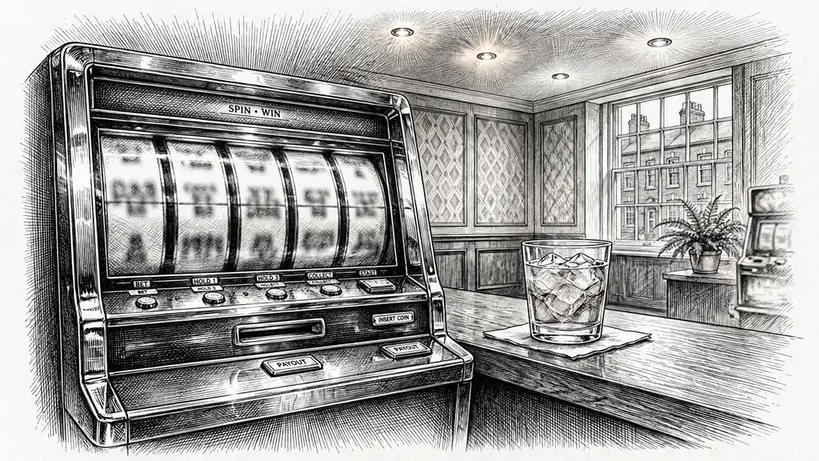
A payline is the route used to evaluate symbols across the reels. In a basic three-reel arrangement, it may run horizontally across the central row. Other designs can provide additional active lines through different visible positions. The important distinction is between the number of reels and the number of paylines: three reels do not necessarily mean that the game has only one possible line.
Players can select the number of active paylines where the game provides that option. The selected lines determine which symbol arrangements are evaluated for a particular spin. If a winning combination lands on a line that is not active, the game’s rules determine whether it qualifies; therefore, the payline settings form part of the stake and result structure rather than being an incidental display choice.
The paytable and payline configuration must be read together. A symbol combination has significance only when it corresponds to a listed winning pattern and appears on a qualifying line. This is why two three-reel slots can look similar while producing different prize patterns: their symbols, line arrangements, and payout rules may not be identical.
Stakes and the role of RTP
The stake is the amount assigned to a spin. A slot can allow the stake to be adjusted, and the selected amount may interact with the number of active paylines. A higher total stake does not change the random nature of the result. It changes the financial value attached to that spin under the game’s rules.
RTP, or return to player, is a theoretical figure associated with the slot’s long-run mathematical model. An RTP of 97% theoretically returns £97 for every £100 spent on the slot. This is not a promise attached to an individual session or a particular sequence of spins. Since online slot outcomes are random, RTP examples describe a theoretical long-run relationship rather than a guaranteed return.
RTP therefore provides information about the designed payout model, but it does not identify which spin will produce a winning combination. It also does not make a three-reel slot predictable. The reel layout, theme, and apparent simplicity cannot be used to infer the outcome of the next spin.
Random outcomes
Online slot machines use random number generator technology to ensure randomness. The generator produces the game’s outcome, after which the corresponding reel symbols are displayed. Slot machines exclusively feature output randomness: the output cannot change depending on a particular scenario. Previous wins, previous losses, the length of a playing session, and the visual sequence of earlier spins do not provide a mechanism for changing the next result.
Online slot outcomes are determined by a random number generator, meaning previous spins do not influence the result of the next one.
This principle separates the visible presentation from the underlying determination of the outcome. The reels may appear to spin and stop in sequence, but the animation does not create a pattern that can be read as a prediction. A near match, a repeated symbol, or a long run without a prize does not establish what will happen on the following spin.
For that reason, the category of three-reel slots is defined by structure, not by an assumed level of predictability. The relevant terms are reels, symbols, paylines, stake, paytable, RTP, and random number generator. Together, they describe how the game is presented, how a winning combination is assessed, and how the result is generated.
In the context of 3 reel slots online, the same vocabulary applies whether the presentation is labelled classic, digital, or casino-themed. “Classic 3-reel slots” describes a style commonly associated with a straightforward layout and familiar symbols, but the classification still depends on the three-reel structure. The label alone does not establish a particular RTP, stake, payout, or probability. Those details belong to the individual game’s rules and mathematical model.
Three-Reel Slot Games and Machines
A three-reel slot game is a digital gambling product built around a compact reel layout. A three-reel slot machine is the physical or simulated machine format that presents this layout as the central feature. The distinction concerns the medium rather than the underlying idea: one term describes the game as software, while the other describes the machine-style presentation associated with it.
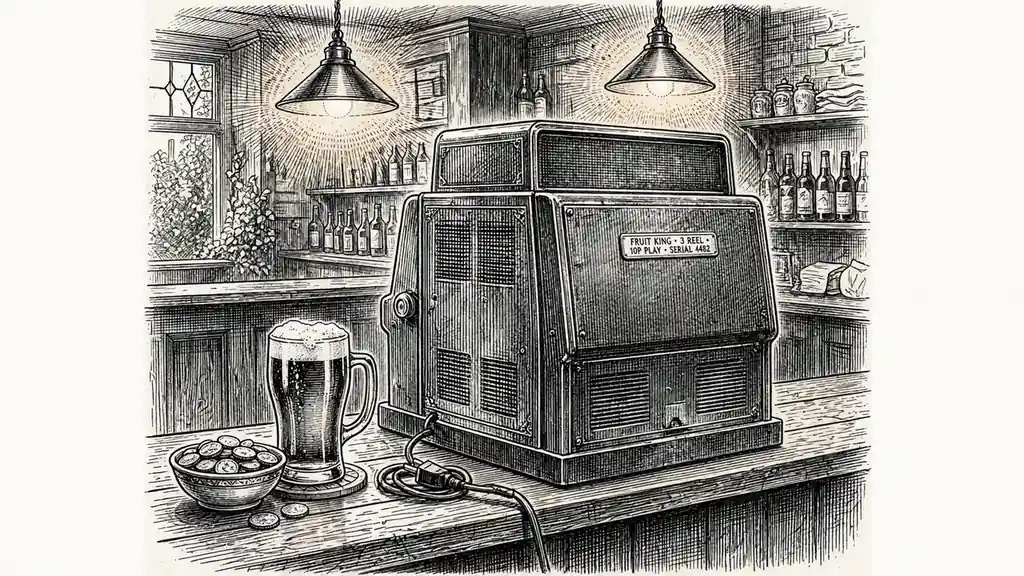
In a physical machine, the reels appear as moving columns behind a visible display. In an online version, the same arrangement is represented on a screen, with controls for starting a spin, selecting a stake, and reviewing the available symbols or winning combinations. The digital product therefore reproduces the visual language of a machine without requiring a cabinet, mechanical reels, or a location such as a casino, arcade, pub, or club.
The machine format reproduced online
The defining presentation is compact. Three vertical reels sit beside one another, with symbols arranged so that a result can be read across the display. The format leaves less visual space for layered bonus screens, animated interfaces, and extensive feature menus than many modern video slots. Its identity instead comes from the direct relationship between the reel window and the result.
This does not mean that every digital game using three reels is identical. Developers can change the symbols, artwork, sound, controls, paytable, and jackpot structure while retaining the same basic machine format. A game can therefore be recognisably machine-like even when its appearance is designed for a browser or mobile screen rather than for a physical cabinet.
The term “3 reel slot games online” refers to this software version. It may be presented as a standalone game within a casino library, while the phrase “3 reel slot machines UK” refers more broadly to the machine-style category available to players in the British market. Neither expression establishes whether the game is free or played with money; that question depends on the mode offered by the operator and belongs to a separate assessment.
Single-coin and multi-line designs
Single-coin slot machines represent the most limited stake structure described in the source material. They allow one coin to be played at a time, normally for a small amount. This design places the emphasis on a single unit of play rather than on selecting several active lines or building a larger combination of simultaneous wagers.
Single-coin machines
These designs focus on a single unit of play, where the player typically selects one coin or one active line for each spin.
A digital three-reel game can reproduce that arrangement through a simple control that represents one coin or one active line. The interface may still be modern, but the play remains machine-like because the basic decision is narrow: select the available stake and start the spin. Such a structure is different from a multi-line slot, where the player can activate several paylines and where the display must communicate more possible winning routes.
Modern multi-line slots can contain many paylines. A specialist review cited in the source material reports that some Megaways slots offer over 100,000 different paylines. This is a feature of particular modern designs, not a defining property of every multi-line game and not a characteristic that should be transferred to three-reel slots as a category. In a three-reel setting, the relevant distinction is whether the game follows a single-line machine model or adds several selectable routes across the reels.
The number of lines also changes how the screen communicates the result. A single-line design can keep the winning path visually clear. A multi-line design requires a paytable or interface that explains which combinations are active and how the result is evaluated. Consequently, two games with the same number of reels can provide substantially different experiences because their line structures are different.
Jackpot presentation
Jackpot treatment is another feature that separates machine designs. Flat-top jackpot machines offer a fixed top prize. Their presentation can remain relatively contained because the maximum award does not change as further spins are made.

Progressive jackpot prizes, by contrast, increase as players around the world spin the reels. A specialist review describes progressive jackpot prizes as capable of reaching thousands of pounds. That statement applies to the cited type of game and should not be treated as a guaranteed outcome or as a standard feature of all three-reel products. A progressive jackpot can therefore be attached to a machine-style game, but the presence of three reels alone does not establish that such a prize exists.
The practical distinction is consequently between format and feature. Three reels identify the basic visual and mechanical framework. Single-coin play, multiple paylines, flat-top prizes, and progressive jackpots are additional design choices. Digital games preserve the machine format while allowing these choices to be represented through software controls, screen graphics, and online game menus.
Three-Reel Slots for Real-Money Play
Real-money three-reel slots are part of the licensed online gambling market in Great Britain. An operator offering online casino games to consumers in Britain must hold a licence from the UK Gambling Commission (UKGC). The requirement concerns the operator and its online gambling activity, rather than the visual style or reel count of an individual slot. A traditional three-reel layout therefore does not create a separate legal category: when money is wagered, the game is covered by the same regulated environment as other online slots.
The regulatory setting is relevant because real-money play involves financial exposure. UK regulators require independent auditing of random number generators (RNGs), and online slot outcomes are produced through RNG technology. The result of one spin is not changed by a previous loss, a recent win, or the amount already wagered. A player may choose the stake available in the game, but that choice does not turn a random outcome into a predictable one.
Financial Risk
Real-money play involves actual financial exposure; ensure you are playing at a licensed operator regulated by the UK Gambling Commission.
How RTP Applies to Three-Reel Slots
Return to player, or RTP, is a theoretical percentage describing the long-run relationship between total stakes and total returns. An RTP of 95% means that, over a very long period and across many plays, the slot returns £95 for every £100 wagered in total. An RTP of 97% would represent £97 returned for every £100 spent in the same theoretical sense.
These figures do not describe the result of a particular session. Random outcomes can produce a return below or above the stated RTP over a short sequence of spins. A player may lose several consecutive stakes, receive a win early, or finish without a meaningful return. None of those individual results demonstrates that the slot has changed its underlying probability model.
RTP is consequently a statistical measure rather than a promise attached to real-money play. The longer-term interpretation also does not mean that a player’s personal spending will be returned proportionally. The calculation applies to the aggregate behaviour of the game across a very large number of plays, not to a fixed repayment for each account, deposit, or visit.
Financial Conditions Matter
The same three-reel game may appear at different online casinos, but the surrounding conditions can differ. A specialist casino comparison source notes differences between operators in game libraries, deposit options, and refund options. Those differences are separate from the slot’s reel design and may affect how a real-money session is funded or managed.
A casino’s game selection determines whether a particular three-reel title is available at all. Deposit arrangements determine which funding methods can be used, while refund arrangements concern how the operator handles relevant account transactions. These details should not be inferred from the presence of a familiar machine-style interface. The visual resemblance to a physical fruit machine provides no evidence about an operator’s payment conditions or account procedures.
The distinction between access and outcome is also important. An online casino can provide a route to wager money on a three-reel slot, but it cannot make the RNG outcome predictable through the choice of deposit method, stake, or session length. Equally, a stated RTP cannot establish that a particular deposit will be preserved or returned.
What “Best” Can and Cannot Mean
Calling a real-money three-reel slot “best” requires a defined criterion. RTP can provide one measurable comparison where the relevant figure is published, but it does not establish the likely result of a short session. A higher theoretical RTP does not remove variance, guarantee a win, or convert gambling into an investment.
For that reason, a careful comparison separates three questions: whether the title is available at a licensed UK operator, what RTP information is stated for the game, and what financial conditions accompany play at that operator. The first concerns regulatory access, the second concerns a long-run statistical model, and the third concerns the practical handling of real-money activity. Treating these as interchangeable would give the RTP figure more meaning than the evidence supports.
Classic and Free Online Three-Reel Slots
Classic three-reel slots reproduce the visual language of early fruit machines: a compact reel window, familiar symbols, and a comparatively restrained presentation. Their appeal lies less in layered bonus systems than in the clarity of the result. Each spin presents a small set of visible symbol positions, while the surrounding interface is designed to resemble a traditional machine rather than a modern entertainment package.
Features a compact reel window, familiar symbols like fruits and bells, and a restrained presentation.
Based on popular culture, such as Hollywood films or video games, often including extra features.
The old-fashioned 3 reel slots category is therefore primarily a design description. It can include fruit symbols, bars, bells, lucky sevens, and other imagery associated with mechanical machines. The presence of a classic theme does not, by itself, establish a particular payout level, return rate, or probability of winning. Those characteristics depend on the individual game and its published rules, not on the number of reels alone.
Free play without wagering
Free online three-reel slots provide a way to examine this format without placing money on the outcome. In demo mode, the game can be opened and played with non-cash credits rather than funds transferred to a gambling account. This makes the format accessible for observation: the reel layout, symbol behaviour, available controls, and presentation can be assessed without converting a spin into a financial transaction.
A profile review reports that UnionJackpots Casino offers a demo mode without wagering funds. That is a statement about the named operator’s described offering, not evidence that every online casino provides the same facility. Availability can therefore differ between sites and between individual games. A casino may list several categories, including slots, blackjack, roulette, live dealer games, scratchcards, and poker rooms, while the presence of a slot category does not establish that every title is available in free mode.
Free classic three-reel slots are also distinct from promotional play involving deposited money. Demo access does not create a cash balance, produce withdrawable winnings, or demonstrate that a real-money version would produce the same financial result. It shows how the game operates as software. The distinction matters because a visual demonstration and a wagering product serve different purposes.
What free play can and cannot show
A demo session can make the old-fashioned structure easier to understand. It may show how symbols are arranged, how a winning combination is displayed, and whether the interface preserves the compact appearance associated with a fruit machine. It cannot establish that a particular title is a high-payout 3 reel slot. “High payout” is not a self-evident category, and no such conclusion follows merely from a classic layout or frequent visible wins during a short session.
The same limitation applies to the question of how to win on 3 reel slots. Random outcomes cannot be converted into a reliable method through repeated free spins, timing, or observation of previous results. Demo play can explain the controls and reduce uncertainty about presentation, but it does not supply a strategy that changes the underlying outcome process.
Classic design should also be separated from branded content. Branded slots are often based on popular culture, including Hollywood films and famous video games. They may have lower RTP and fewer extra features than other slots, according to the stated facts, but those observations concern branded games rather than every three-reel title. A simple fruit-themed game and a licensed entertainment-themed game should not be treated as equivalent merely because both use reels.
Free play is consequently best understood as a format and accessibility feature. It allows the classic three-reel presentation to be examined without wagering funds, while questions about real-money conditions, operator requirements, and financial returns belong to the paid version of the product.
Playing Classic Three-Reel Slots Online for Money
Playing classic three-reel slots for money changes the purpose of the session. A free version reproduces the appearance and mechanics without placing funds at risk; a paid version connects each spin with a financial transaction governed by the casino’s terms. The reels may look identical, but the conditions surrounding deposits, withdrawals, accepted currencies, and account checks are different.
Transitioning to Play
Moving from demo mode to real-money play changes the session from a visual demonstration to a financial transaction governed by casino terms.
From Demo Play to Wagering
Free play is useful for examining the layout, symbols, stake controls, and general presentation of a classic slot without committing money. A real-money game requires an account with an operator that is permitted to provide online gambling in Great Britain. Online casinos operating in Britain must hold a licence from the UK Gambling Commission.
The distinction is therefore not simply whether a game opens in a browser. It concerns what happens when a stake is attached to a spin. In a demo, any displayed win has no cash value. In paid play, the result affects the player’s balance according to the casino’s rules. The same title can consequently serve two different purposes: familiarisation in free mode and wagering through a licensed gambling service.
A profile review describes UnionJackpots Casino as offering real-money play in which players can stake cash or other accepted currencies. That statement applies to the operator described in that source, not automatically to every casino hosting classic three-reel games. Accepted payment methods and currencies must therefore be treated as operator-specific matters.
Conditions That Differ Between Casinos
The game library is one point of difference. One casino may list a particular classic three-reel title while another may not carry it. Deposit options also vary, as do refund options, according to the cited profile review. These differences matter when a player moves from a free version to a paid account because the game itself is only one part of the experience.
The relevant information is normally found in the operator’s terms, cashier section, and game rules. These documents identify the currencies accepted for funding, the conditions attached to transactions, and the treatment of refunds. A title’s familiar fruit symbols or single payline do not establish any of those conditions.
The legal framework adds requirements beyond the game interface. Licensed operators must provide consumer protections, disclose payment-processing practices, and allow players to set deposit limits, take breaks, or self-exclude. Remote operators must also belong to GAMSTOP. These controls remain relevant even when the selected game is a simple classic slot rather than a feature-heavy video slot.
What Remains the Same
The visual identity of a classic three-reel slot generally remains the main continuity between free and paid versions: a compact reel display, traditional symbols, and a straightforward machine-style presentation. Free play can show how those elements are arranged, but it cannot demonstrate the practical consequences of depositing, staking, or withdrawing funds.
For that reason, “free 3 reel slots no registration” describes an access condition rather than a form of real-money gambling. A no-registration demo may allow the format to be inspected without creating a gambling account, while paid play requires the relevant operator relationship and its associated conditions. The transition from classic three-reel slots online in free mode to real-money play is therefore a change in financial status, not merely a change of button.
Three-Reel Fruit Machines: Paylines and Odds
Three-reel fruit machines represent the traditional side of slot design, using a compact reel window and familiar symbols such as fruit, bells, bars, and sevens. Their structure is often associated with a straightforward payline arrangement, but the apparent simplicity does not remove the need to distinguish between stake selection, active lines, and probability.
How paylines shape the game
A payline is the route across the reels on which matching symbols may produce a winning combination. In a basic three-reel layout, the principal line runs horizontally through the centre of the display. Some online versions add further lines, allowing combinations to be evaluated above or below the central row. The number of available lines therefore affects how many possible symbol arrangements are considered on each spin.
Payline
A specific route across the reels used to evaluate symbol arrangements to determine if a winning combination has occurred.
The player interface may allow both the stake and the number of active paylines to be selected. These are separate settings. Increasing the stake per line changes the amount committed to each active line, while activating additional lines changes the range of combinations included in the spin. A comparison between two 3 reel fruit machines is therefore incomplete unless both the line configuration and the stake settings are clear.
A free 3 reel slot machine can reproduce the same payline structure without wagering funds. In that setting, the line arrangement remains relevant for understanding the game, but the result has no financial consequence. Demo play can consequently show how symbols are evaluated without demonstrating that a particular outcome is more likely to occur for money.
Interpreting odds in three-reel slots
The phrase “odds” can refer to several different ideas. It may describe the chance of a particular symbol combination, the frequency of winning results, or the broader return indicated by the theoretical RTP. These concepts should not be treated as interchangeable.
Three-reel slot machine odds are governed by the game’s random number generator and symbol configuration. The random number generator determines each outcome independently of a previous result. A run of losses does not make a winning combination due, and a previous win does not make another win less possible. The visible reel movement is therefore a presentation of the result rather than a mechanism that can be influenced by timing or pattern recognition.
RTP provides a long-run statistical interpretation rather than a prediction for an individual session. An RTP of 95% means that, over a very long period and many plays, the slot returns £95 for every £100 wagered in total. It does not mean that each player receives 95% of a particular deposit, nor that the return will appear evenly across a short sequence of spins.
Online versions of fruit machines
Three-reel slot machines online may preserve the narrow reel display and limited line design of a physical fruit machine while adding digital controls for stake and paylines. The essential comparison remains mathematical: which lines are active, how much is placed on each line, and which symbol combinations carry prizes.
The number of reels alone does not establish the odds. A three-reel game may use a simple central line or a broader set of active routes, and its RTP must be considered separately from its visual style. Similarly, a familiar fruit theme does not indicate that a result is more frequent or that a payout is more likely.
For this reason, paytable information is more informative than appearance. It identifies the symbols recognised by the game and explains which line arrangements can produce a prize. RTP then supplies the long-run return measure, while the random number generator determines the outcome of each individual spin. Together, these details provide the proper basis for assessing a three-reel fruit-machine format without presenting probability as a guarantee.
No-Download and No-Deposit Three-Reel Slots
Browser-based play removes the need to install software before a three-reel slot can be opened. A compatible web browser is sufficient for a game presented on an online casino site, although the operator’s account, age, and jurisdiction requirements still apply when the game is played for money. “No download” therefore describes access, not the financial status of a session.
- Use demo mode to examine the interface and reel layout.
- Check for UKGC licensing before depositing funds.
- Do not assume demo wins can be withdrawn as cash.
- Do not expect a high RTP to guarantee a win in a short session.
“No deposit” has a different meaning. It may refer to a demo mode in which the reels can be used without wagering funds, but it does not mean that every game is available without registration or that winnings can be withdrawn. A profile description of UnionJackpots Casino, for instance, states that its demo mode does not require wagering funds. That statement should be treated as a claim from that particular review source, rather than as a general condition across UK casinos.
Free Play in a Browser
Free three-reel slots without a download are primarily a way to examine the interface and the machine-style presentation. The session does not require a cash stake when it is explicitly labelled demo or free play. This can make the format easier to compare with other casino products, while keeping the distinction between simulated play and real-money gambling clear.
A no-deposit session is not necessarily identical to a no-download session:
- No download concerns how the game is accessed.
- No deposit concerns whether funds must be added before play.
- A browser game may require an account even when it has a demo mode.
- Demo play does not establish that the same title is available for cash wagering under identical conditions.
Three-Reel Slots and Video Slots
The comparison with video slots concerns format rather than access. Three-reel slots retain a compact reel layout and a limited visual structure associated with machine-style play. Video slots are a broader digital category and may use more reels, additional paylines, animated scenes, bonus rounds, and other presentation elements. The two categories can overlap in software form, but they are not interchangeable descriptions.
The difference becomes particularly clear when paylines are considered. A three-reel game may focus on a small, readily visible arrangement, whereas modern multi-line slots can support extensive combinations. A source describing Megaways slots reports that some titles offer over 100,000 different paylines. That figure belongs to the specific Megaways category and should not be transferred to three-reel games as a general characteristic.
UK online casinos may place three-reel slots alongside video slots, blackjack, roulette, live dealer games, scratchcards, and poker rooms. Their shared browser access does not make their rules, layouts, or outcome structures the same. Consequently, “free” and “no download” identify the conditions of access, while “three-reel” and “video slot” identify different aspects of the game’s design.
The Three-Reel Slot Format in UK Online Casinos
A three-reel slot is a compact online slot format that reproduces the visual structure of a traditional machine: three vertical reels, a limited arrangement of symbols, and a straightforward win display. Its identity comes from the reel count rather than from a particular theme, software provider, or payment method. Some titles use fruit symbols, while others use bars, bells, sevens, or branded imagery.
Within a UK online casino, the format is presented as software rather than as a physical cabinet. The reels are controlled by a random number generator, which produces unpredictable outcomes for each spin. The result is therefore not altered by the preceding spin, the length of a playing session, or a particular visual sequence. The familiar mechanical appearance does not change the underlying digital mechanism.
The three-reel structure also limits the visual complexity of the game. Compared with many modern titles, it generally presents fewer symbols and a more concentrated arrangement of winning combinations. The number of active paylines, available stake settings, and prize rules remain properties of the individual game rather than automatic consequences of having three reels.
Format Three-reel layout
Outcome Basis Random Number Generator (RNG)
Regulation UK Gambling Commission (UKGC)
In the UK online-casino environment, this format can sit alongside other slot categories in the same game library. Its relatively restrained presentation may appeal to players interested in a machine-like layout without extensive animated interfaces or layered bonus features. That description concerns presentation, not a promise of simpler outcomes or more favourable returns.
The term “three-reel slot” consequently identifies a structural category. It does not by itself establish the game’s RTP, volatility, maximum prize, symbols, or eligibility for any particular promotional offer. Those details must be assessed from the rules and information supplied for the specific title.
Classic Three-Reel Slots and Their Traditional Design
Classic three-reel slots represent the traditional machine identity of slot play. Their presentation is built around a compact bank of reels, familiar symbols and a restrained visual style rather than an elaborate narrative or a large collection of interactive features. The design recalls the mechanical appearance associated with early fruit machines while existing in both physical and digital forms.
A defining feature is the emphasis on straightforward operation. The player selects a stake, activates the reels and evaluates the resulting symbol arrangement against the available win line. Single-coin slot machines express this simplicity particularly clearly: they allow one coin to be played at a time, normally for a small amount. This structure keeps the relationship between the chosen stake and the spin easy to identify.
The visual language of a classic 3-reel slot commonly relies on recognisable fruit symbols, bars, bells and sevens. These symbols are not presented as elements of a complex fictional world. Instead, they support the machine-like character of the game, where the reels and their combinations remain the central subject.
Traditional design can also include a fixed top prize. A flat-top jackpot machine offers a set maximum prize rather than a prize that grows as further play contributes to a shared pool. This distinguishes the flat-top structure from progressive jackpot slots, whose prize mechanism is based on an increasing jackpot.
Classic three-reel slots therefore occupy a specific category: their appeal lies in visual familiarity, limited structural complexity and the clear identity of a slot machine. The format does not require modern graphical effects to communicate its purpose. Its design depends on the legibility of the reels, the symbols and the selected stake.
Classic Slots Versus Video Slots
Classic slots and video slots differ mainly in structure, presentation, and the number of ways a spin can produce a winning combination. A classic slot generally follows the visual language of a traditional machine: a limited reel layout, familiar symbols, and a small set of paylines. Its design makes the relationship between the symbols and the paying line comparatively direct.
Video slots use a broader digital format. Slot games typically display three to five reels, but the presence of additional reels does not by itself determine whether a game is classic or video. The more significant distinction is the way the game combines reels, paylines, symbols, and additional functions. Video slots can support several active paylines and may include bonus rounds, animated sequences, and other features linked to particular symbols.
Payline scale is therefore an important point of comparison. A classic design may retain a compact line arrangement, while a modern multi-line slot can provide many possible routes to a prize. A specialist review reports that some Megaways slots offer over 100,000 different paylines. This figure describes a feature attributed to those games, not a general property of video slots.
The difference also affects how the game is read. Classic slots present a relatively narrow set of outcomes, making each symbol’s role easier to identify. Video slots can distribute winning combinations across a more complex matrix, with the interface explaining active lines, symbol conditions, or bonus triggers.
Neither category is defined solely by whether it appears online. Both can be delivered through a browser, while their underlying identity comes from the reel arrangement, payline structure, and feature design. In practical terms, classic slots prioritise a restrained machine-style layout; video slots provide the larger structural range associated with contemporary digital games.
Can I win real money playing progressive slots?
Yes, progressive slots can award real-money prizes, and some progressive jackpots can reach thousands of pounds. However, the probability of winning the jackpot is extremely low.
What are the main types of slot machines?
The main types include single-coin machines, multi-line slots, flat-top jackpot machines, progressive jackpot slots, and branded slots. Slot games can also differ in their reel count, paylines, symbols, and bonus features.
How do I know if a casino is licensed in the UK?
Check that the online casino is licensed by the UK Gambling Commission. Online casinos operating in Britain must hold this licence.
Created by the ”Casinouk Bonuses Info” editorial team.